
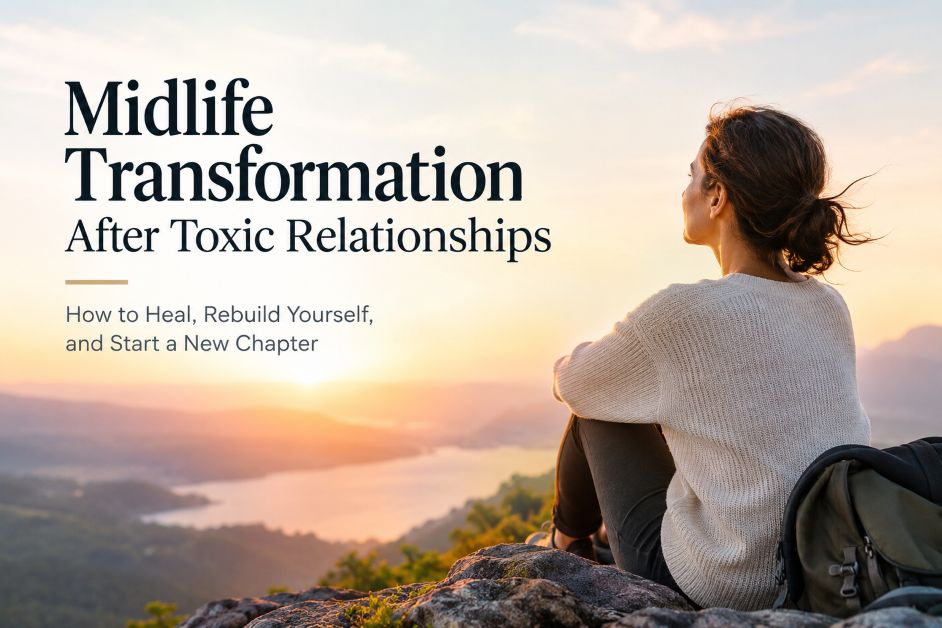
For many people, midlife transformation after toxic relationships becomes more than recovering from a difficult partnership. It becomes an opportunity for midlife self-discovery, emotional healing, and creating a life that reflects personal values rather than fear, guilt, or someone else’s expectations.
A toxic relationship can change the way you see yourself, your relationships, and even your future. When that relationship ends, the freedom you expected may arrive alongside uncertainty: Who am I now? What do I want? And is it really possible to start again?
Whether you are starting a new life after a toxic relationship, rebuilding after divorce, or simply realizing that your old way of living no longer fits, transformation can begin with small, intentional choices.
What Does Midlife Transformation After a Toxic Relationship Really Mean?
Midlife transformation is not about suddenly becoming a different person. It is about reconnecting with the person you may have neglected while trying to survive an unhealthy relationship.
After prolonged emotional abuse, manipulation, or psychological manipulation, you may need to rebuild several areas of your life at once. That can include your confidence, friendships, boundaries, career, purpose, and understanding of what constitutes a healthy relationship.
A genuine transformation can involve:
- Emotional recovery
- Rebuilding your identity
- Developing healthy boundaries
- Restoring self-trust
- Reclaiming independence
- Developing emotional resilience
- Creating healthier relationships
- Finding purpose during a major life transition
Why Midlife Can Become a Turning Point
Midlife can provide something that is often difficult to access during earlier stages of life: perspective.
Years of experience can make unhealthy patterns easier to recognize. You may become less willing to tolerate relationship control, chronic criticism, manipulation, or relationships that require you to abandon yourself.
Instead of seeing midlife as the end of possibilities, you can view it as a period of midlife clarity, intentional growth, and personal reinvention.
Why Starting Over Can Feel Especially Difficult in Midlife
Starting over in midlife can feel intimidating because responsibilities may be greater than they were when you were younger. There may be financial concerns, family responsibilities, social expectations, or fear about spending more time alone.
You may also experience grief for the future you thought you would have.
That grief does not mean you made the wrong decision by leaving. It means something important changed, and regret can sometimes become part of understanding what you want differently in the future.
How Toxic Relationships Can Change Your Sense of Self
One of the most difficult consequences of an unhealthy relationship is loss of identity.
A person experiencing emotional manipulation may gradually become focused on preventing conflict, meeting another person’s expectations, or proving their loyalty. Over time, personal preferences and needs can become secondary.
Losing Yourself While Trying to Keep the Relationship
You may have stopped expressing opinions because disagreement created conflict. You may have abandoned hobbies, friendships, or ambitions because they were criticized or discouraged.
This pattern can become self-abandonment: repeatedly ignoring your own needs to preserve a relationship.
When Confidence Has Been Replaced by Self-Doubt
Repeated criticism and gaslighting can cause someone to question their memories, decisions, emotions, and judgment.
After leaving, this can make ordinary decisions surprisingly difficult.
Rebuilding self-trust after manipulation therefore becomes an important part of recovery.
Why You May Not Recognize Yourself After Leaving
Leaving an unhealthy relationship does not instantly restore your previous identity.
You may need time to understand which parts of your personality were suppressed, which beliefs were imposed on you, and which choices genuinely belong to you.
That process is part of midlife self-discovery.
Rebuild Your Identity Before Rebuilding Your Relationship Life
One of the most valuable parts of rebuilding your life in midlife is discovering what you actually want.
Instead of immediately asking, “Who should I date next?” consider asking, “Who am I becoming?”
Rediscover What You Actually Like
Start with simple questions:
- What activities make me feel energized?
- What interests did I stop pursuing?
- What do I enjoy when nobody else is influencing my decision?
- Which values matter most to me?
- What kind of environment helps me feel emotionally safe?
These questions can help restore self-awareness, authenticity, and independence.
Reconnect With the Parts of Yourself You Put Away
You may want to reconnect with friends, creativity, education, travel, faith, career interests, exercise, reading, or other activities that once gave your life meaning.
Rediscovering yourself after emotional abuse does not require one dramatic transformation. It can happen through dozens of small decisions that remind you that your life belongs to you.
Rebuild Self-Trust After Manipulation and Emotional Abuse
Rebuilding self-trust is often gradual.
If your decisions were repeatedly criticized, you may have learned to seek approval before trusting yourself. Recovery involves practicing independent decision-making again.
Start small.
Choose what you want for dinner. Decide how you want to spend your weekend. Say no when something does not feel right. Express an opinion without immediately apologizing for having one.
Each healthy decision becomes evidence that you can listen to yourself again.
This is an important part of rebuilding confidence after emotional abuse.
Set Boundaries That Protect Your New Life
Healthy boundaries are not punishments. They are guidelines that communicate what you will and will not accept.
After a toxic relationship, boundaries can feel uncomfortable because saying no may trigger old feelings of guilt.
What Healthy Boundaries Look Like After a Toxic Relationship
Boundaries can involve:
- Emotional availability
- Personal time
- Communication
- Physical space
- Financial decisions
- Digital communication
- Family relationships
- Romantic relationships
Developing stronger boundaries can help protect the progress you make during recovery.
How to Say No Without Feeling Guilty
You do not need a lengthy explanation every time you decline something.
A simple “That does not work for me” can be enough.
Learning to communicate clearly is part of reclaiming your independence and developing self-respect.
Break the Cycle of Toxic Relationship Patterns
Healing is not only about leaving the past. It is also about recognizing patterns that could influence future relationships.
Recognize Patterns You Previously Normalized
Pay attention to behaviors such as:
- Excessive control
- Chronic criticism
- Isolation
- Guilt-based control
- Emotional unpredictability
- Manipulation
- Lack of accountability
- Unequal emotional labor
Understanding these patterns can make it easier to recognize unhealthy relationship patterns earlier.
Understand Trauma Bonding Without Blaming Yourself
Trauma bonding can create powerful emotional attachment within harmful relationship dynamics. Understanding it can help explain why leaving may feel emotionally complicated.
The goal is not to blame yourself. It is to develop greater awareness and compassion for your own healing journey.
Replace Familiar Dysfunction With Healthy Relationship Standards
A healthier relationship should allow room for respect, autonomy, communication, accountability, reciprocity, and emotional safety.
Familiarity is not the same as compatibility.
Healing From a Toxic Relationship Does Not Mean You Must Rush Into Another One
Healing from a toxic relationship is not a race toward another romantic partnership.
Sometimes the most important relationship to rebuild first is the one you have with yourself.
Learn to Be Alone Without Feeling Abandoned
Loneliness and solitude are different experiences.
Solitude can give you space to discover what you enjoy without constantly adapting to someone else’s expectations.
Give Yourself Time to Understand What Happened
Journaling, supportive friendships, creative activities, spiritual practices, and professional support can all become part of psychological healing.
If relationship trauma has significantly affected your daily life, seeking qualified professional support can also be an important step.
When You Are Ready to Date Again
There is no universal timeline for dating after emotional abuse.
Instead of asking whether enough time has passed, consider whether you can identify your boundaries, recognize warning signs, communicate your needs, and remain connected to your own identity within a relationship.
Rediscover Purpose During Your Midlife Transformation
A powerful midlife reinvention involves more than recovering from the past. It means creating a future that feels meaningful.
Ask What Matters to You Now
Consider:
- What gives my life meaning?
- What do I want the next decade to look like?
- What have I postponed?
- What values do I want to live by?
- What would make my life feel more authentic?
Rebuild Your Career or Professional Identity
A toxic relationship may have affected your confidence at work or caused you to postpone professional goals.
Rebuilding your life in midlife can include pursuing education, developing new skills, changing careers, or simply regaining confidence in your professional abilities.
Create Goals That Belong to You
Your future does not need to be built around proving anything to an ex-partner.
Build goals because they matter to you.
That shift from reaction to intention is one of the clearest signs of personal reinvention.
Can Faith Support Healing After a Toxic Relationship?
For some people, spirituality can become an important source of faith and trauma recovery, meaning, and hope.
Healthy spiritual support can encourage compassion, dignity, forgiveness, and personal growth.
However, faith should not be used to pressure someone into accepting manipulation or ongoing harm.
When Religious Guilt Complicates Relationship Recovery
Religious guilt used as relationship control can make it harder for someone to establish boundaries or leave an unhealthy situation.
Healthy faith and healthy boundaries can coexist.
For readers exploring Christian codependency healing, it can be particularly valuable to distinguish genuine compassion from patterns of self-sacrifice that repeatedly enable unhealthy behavior.
Stories exploring trauma, faith, identity, and recovery can also provide opportunities for reflection, including through a psychological thriller about trauma or a gothic psychological novel that examines the psychological consequences of fear, secrecy, control, and emotional wounds.
What a Healthy Midlife Transformation Can Look Like
A meaningful transformation may gradually move you:
From survival to stability. You begin creating emotional and practical safety.
From self-doubt to self-trust. You make decisions without constantly seeking external approval.
From isolation to connection. You build relationships based on mutual respect.
From losing yourself to knowing yourself. Your identity becomes clearer.
From regret to purpose. Your past becomes part of your story without controlling your future.
This is what creating a meaningful second chapter can look like.
A Practical 7-Step Midlife Transformation Plan
- Acknowledge what happened. Recognize unhealthy patterns without defining yourself by them.
- Create emotional and practical safety. Establish distance and appropriate support where necessary.
- Rebuild your boundaries. Practice saying no and protecting your time.
- Rediscover your identity. Explore interests, values, relationships, and goals.
- Rebuild self-trust. Make small decisions independently.
- Define your future around your values. Create goals that genuinely belong to you.
- Build healthier connections. Choose relationships that support mutual respect and emotional safety.
How Do You Know Your Midlife Transformation Is Working?
Healing may not always feel dramatic. Sometimes progress appears in quiet ways.
You may notice that you can say no without excessive guilt. You may recognize red flags sooner. You may feel comfortable spending time alone. You may stop explaining every decision.
You may also discover that your future feels more interesting than your past.
These can be signs of emotional resilience, growing confidence, and a stronger sense of self.
Your Midlife Transformation Can Become a New Beginning
Midlife transformation after toxic relationships is not about pretending the past never happened. It is about refusing to let the past define everything that comes next.
You can rebuild your identity, establish healthier boundaries, develop self-trust, reconnect with purpose, and create relationships that respect who you are becoming.
Starting over after 40 or starting over after 50 may feel frightening, but starting again does not mean starting from nothing. You bring experience, knowledge, resilience, and a clearer understanding of what you will no longer accept.
Your next chapter does not have to look like your old life.
It can be more intentional, more authentic, and more fully yours.


Thank you Angie for the reference back to my site! It means a lot coming from someone who knows about midlife transformation.
I started to recognize the negative patterns I kept repeating in my life and I feel that needed, at least for me, to come after decades of bad decisions in relationships.
Best to you.
~Allie