
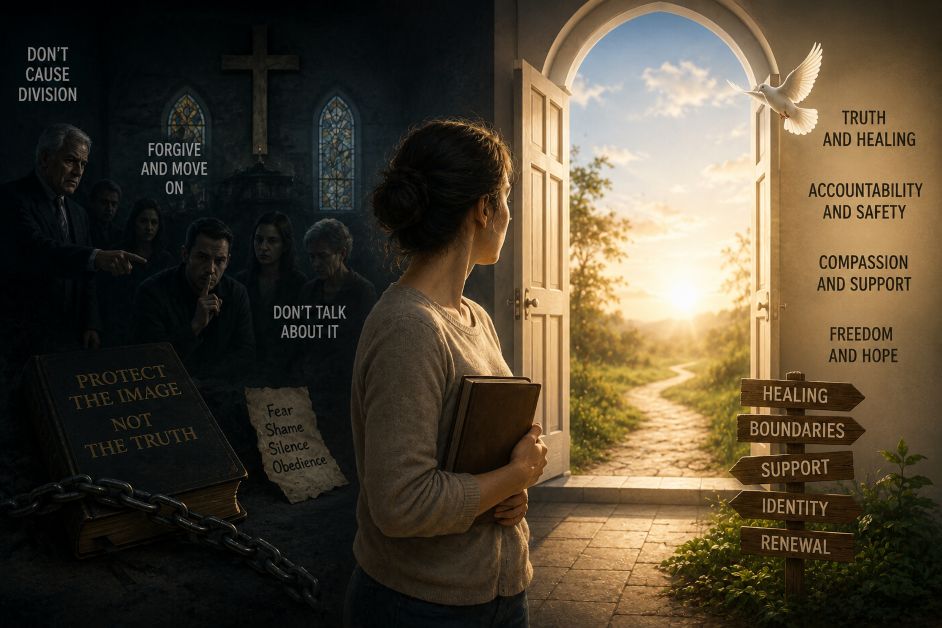
Family relationships and faith communities are often expected to provide comfort, protection, and belonging. However, in some situations, Religious Communities Covering Family Trauma can unintentionally or deliberately create environments where family trauma remains hidden. When loyalty to an institution or family reputation takes priority over honesty and accountability, survivors may struggle to find validation, support, or healing.
Understanding Religious Communities Covering Family Trauma does not mean criticizing faith itself. Instead, it involves recognizing how unhealthy systems can misuse religious beliefs to conceal family trauma, justify spiritual abuse, or discourage open conversations about emotional abuse and recovery. Healthy faith encourages truth, compassion, and accountability, while unhealthy environments often rely on secrecy and fear.
This article explores how Religious Communities Covering Family Trauma develop, why silence persists, the warning signs to recognize, and the psychological effects that hidden trauma can have on individuals and families. By increasing awareness, readers can better understand the difference between supportive faith communities and harmful patterns that prevent healing.
What Does Religious Communities Covering Family Trauma Mean?
Religious Communities Covering Family Trauma refers to situations where a faith community, religious culture, or family within that community minimizes, ignores, conceals, or discourages discussion about abuse, neglect, or psychological harm in order to protect reputations, traditions, or institutional authority.
This differs significantly from healthy religious practice. A healthy community seeks truth, accountability, compassion, and restoration, while harmful systems may unintentionally enable religious trauma, family trauma, and psychological abuse by discouraging survivors from speaking openly.
In many cases, the problem is not faith itself but how religious teachings are interpreted or applied. When doctrines are used to silence concerns instead of encouraging justice and healing, emotional wounds can deepen over time.
Why Family Trauma Sometimes Remains Hidden Within Religious Communities
Many people assume that faith communities naturally protect vulnerable individuals. While this is often true, some communities struggle to respond appropriately when difficult family situations arise. Understanding why Religious Communities Covering Family Trauma occurs can help identify unhealthy patterns before they become deeply rooted.
Protecting Reputation Over Accountability
One common reason trauma remains hidden is the desire to preserve a positive public image. Religious organizations often value trust, unity, and community reputation. Unfortunately, these goals can sometimes overshadow the need for transparency.
Families experiencing emotional abuse, psychological abuse, or domestic conflict may be encouraged to remain silent to avoid embarrassment or public scrutiny. Leaders may believe they are protecting the church’s reputation, yet this silence often prolongs suffering instead of promoting healing.
True accountability strengthens communities because it demonstrates integrity rather than perfection.
Fear of Judgment
Survivors frequently fear being misunderstood or blamed for family conflict.
Concerns may include:
- Being viewed as lacking faith
- Being accused of creating division
- Fear of disappointing respected leaders
- Losing relationships within the congregation
These fears often contribute to prolonged silence and reinforce religious trauma, especially when emotional pain is dismissed as a spiritual weakness instead of being recognized as a legitimate psychological concern.
Misunderstanding Forgiveness
Forgiveness is a central principle in many faith traditions, but it is sometimes misunderstood.
Some survivors hear messages suggesting they should:
- forgive immediately
- avoid discussing past abuse
- reconcile regardless of safety
- remain in unhealthy situations
Healthy forgiveness does not require ignoring harmful behavior or abandoning appropriate boundaries. Genuine healing often involves both compassion and accountability.
Understanding this distinction helps reduce religious manipulation while promoting healthier relationships built on trust and respect.
Pressure to Maintain Family Image
Many religious communities place significant value on family stability and moral character.
Although these values can strengthen relationships, they may also create pressure to hide serious problems.
Families experiencing:
- childhood trauma
- emotional neglect
- domestic violence
- controlling relationships
may feel compelled to present an image of harmony despite ongoing struggles.
Over time, maintaining appearances becomes more important than addressing underlying pain, contributing to cycles of intergenerational trauma that affect future generations.
Common Forms of Family Trauma Hidden by Religious Communities
Not every form of trauma leaves visible evidence. Some of the deepest wounds develop gradually through repeated emotional experiences that are dismissed or normalized.
Understanding these forms of family trauma helps explain why recovery often requires both emotional and spiritual healing.
Emotional Abuse
Unlike physical violence, emotional abuse often leaves invisible wounds that affect confidence, identity, and emotional well-being.
Examples include:
- constant criticism
- humiliation
- intimidation
- emotional withdrawal
- manipulation
- controlling behavior
When these behaviors are minimized or justified using religious language, survivors may question their own experiences instead of recognizing unhealthy dynamics.
Psychological Manipulation
Psychological abuse frequently involves subtle patterns designed to control another person’s thoughts, emotions, or behavior.
Examples include:
- guilt
- fear
- shame
- gaslighting
- emotional dependency
- isolation
Within unhealthy religious environments, manipulation may appear spiritual rather than psychological, making it even more difficult to identify.
Victims may believe they are being faithful when they are actually experiencing coercion.
Domestic Violence
Domestic violence affects individuals from every cultural, economic, and religious background.
While many faith communities actively support survivors, others may unintentionally discourage reporting abuse by emphasizing reconciliation without addressing personal safety.
Healthy communities recognize that protecting vulnerable individuals should always take precedence over preserving appearances.
Childhood Emotional Neglect
Not all childhood trauma involves physical abuse.
Childhood emotional neglect occurs when a child’s emotional needs are consistently ignored, dismissed, or misunderstood.
Children raised in environments where emotions are discouraged may struggle with:
- self-worth
- trust
- healthy attachment
- emotional regulation
Without intervention, these experiences may contribute to complex PTSD, identity recovery challenges, and long-term relationship difficulties in adulthood.
Religious Teachings That Can Be Misused to Silence Survivors
Faith itself is not harmful, but religious teachings can become damaging when removed from their intended context.
In unhealthy environments, spiritual concepts may be used to discourage honest conversations about abuse or trauma.
Examples include statements such as:
- “Honor your parents no matter what.”
- “Questioning leadership shows a lack of faith.”
- “Talking about abuse creates division.”
- “You simply need to pray more.”
- “Forgiveness means forgetting.”
Although these phrases may sound spiritually meaningful, they can unintentionally reinforce faith-based manipulation, spiritual coercion, and religious shame when used to dismiss legitimate concerns.
Healthy faith communities encourage truth alongside compassion. They recognize that accountability, justice, and emotional safety are not incompatible with forgiveness but are often essential components of genuine healing.
Psychological Effects of Religious Communities Covering Family Trauma
When Religious Communities Covering Family Trauma becomes part of a family’s experience, the emotional impact often extends far beyond the original events. Survivors may not only struggle with painful memories but also with confusion about trust, identity, and spirituality. When both family relationships and religious environments discourage open discussion, healing can become significantly more complicated.
Many mental health professionals recognize that unresolved family trauma, religious trauma, and spiritual abuse can contribute to long-term emotional distress if left unaddressed.
Common psychological effects include:
- Anxiety and persistent worry
- Depression and emotional exhaustion
- Complex PTSD
- Low self-esteem
- Difficulty trusting others
- Fear of authority figures
- Emotional numbness
- Feelings of guilt or shame
- Challenges with identity recovery
Some individuals also experience confusion between genuine faith and harmful religious practices. They may question whether their emotional pain reflects personal failure rather than recognizing unhealthy systems that discouraged honesty and accountability.
Recognizing these effects is an important step toward healing because it helps survivors understand that their emotional responses are often normal reactions to prolonged psychological stress rather than personal weakness.
Warning Signs a Religious Community Is Protecting Family Trauma
Not every religious organization responds to family trauma in the same way. Many churches actively protect vulnerable people and encourage transparency. However, there are situations where warning signs suggest that a community may be prioritizing its reputation over the well-being of individuals.
Common warning signs include:
- Discouraging members from reporting abuse
- Minimizing emotional abuse or psychological abuse
- Blaming survivors for family conflict
- Using guilt or shame to discourage questions
- Protecting influential individuals from accountability
- Demphasizing reputation over truth
- Treating forgiveness as a substitute for safety
- Ignoring repeated patterns of harmful behavior
- Discouraging professional counseling
- Pressuring individuals to remain in unsafe relationships
Healthy communities recognize that accountability strengthens trust rather than weakens it. Addressing difficult situations honestly helps prevent additional harm and creates an environment where healing becomes possible.
Healthy Faith Communities Look Different
Healthy faith communities demonstrate that compassion and accountability can exist together. Rather than hiding problems, they encourage honesty, emotional safety, and respectful dialogue.
Transparency
Healthy communities value openness instead of secrecy.
Leaders acknowledge mistakes, encourage appropriate reporting, and communicate honestly when concerns arise.
Transparency builds trust while reducing opportunities for religious manipulation and faith-based manipulation.
Accountability
Accountability protects both individuals and the community.
Rather than dismissing concerns, healthy leaders investigate allegations carefully, listen respectfully, and prioritize the safety of vulnerable individuals.
True accountability reflects integrity rather than punishment.
Trauma-Informed Leadership
Leaders who understand trauma recognize that survivors often respond differently than expected.
They avoid:
- victim blaming
- spiritual shaming
- dismissing emotional pain
Instead, they encourage compassionate listening, education, and access to appropriate support.
A trauma-informed care approach creates safer environments for healing.
Safe Reporting Systems
Healthy organizations establish clear procedures for reporting abuse and protecting confidentiality.
Members understand:
- where to seek help
- how concerns are investigated
- who provides support
- how vulnerable individuals remain protected
These systems encourage trust while reducing fear and uncertainty.
How Survivors Can Begin Healing
Healing from Religious Communities Covering Family Trauma is rarely immediate. Recovery often involves rebuilding emotional health while separating genuine faith from harmful experiences.
Recognize the Difference Between Faith and Harmful Culture
Many survivors discover that their pain resulted from unhealthy people or organizational practices rather than their personal beliefs.
Understanding this distinction helps reduce religious shame while allowing individuals to evaluate faith more thoughtfully.
Seek Trauma-Informed Counseling
Professional counseling can provide practical tools for understanding:
- religious trauma
- family trauma
- complex PTSD
- emotional regulation
- relationship patterns
Working with qualified professionals helps individuals process painful experiences within a safe environment.
Build Healthy Boundaries
Healthy boundaries protect emotional well-being.
They allow individuals to:
- say no without guilt
- recognize manipulation
- communicate respectfully
- reduce unhealthy dependence
- strengthen self-respect
Boundary setting is an important component of long-term emotional healing.
Reconnect With Safe People
Supportive relationships play a significant role in recovery.
Healthy friendships, trusted mentors, family members, or compassionate faith communities can provide encouragement while rebuilding confidence and trust.
Positive relationships help replace isolation with connection.
Restore Personal Identity
Many survivors spend years defining themselves through family expectations or unhealthy religious environments.
Recovery often includes:
- rediscovering personal values
- rebuilding confidence
- exploring healthy spirituality
- developing independence
- strengthening emotional resilience
Identity recovery becomes possible when individuals learn that their worth is not determined by manipulation, secrecy, or fear.
Frequently Asked Questions
Can religious communities unintentionally hide family trauma?
Yes. Sometimes communities prioritize harmony, reputation, or conflict avoidance without recognizing how these responses may unintentionally silence survivors.
Is questioning church leadership wrong?
Respectful questions and accountability are healthy parts of responsible leadership. Honest dialogue helps strengthen trust while encouraging transparency.
Can faith still be part of recovery?
For many individuals, faith continues to provide hope, comfort, and resilience. Healing often involves separating healthy spirituality from harmful behaviors or unhealthy organizational practices.
What is religious trauma?
Religious trauma refers to psychological or emotional distress associated with harmful religious experiences, including spiritual abuse, coercive environments, or manipulative teachings.
How do I know if my community is emotionally healthy?
Healthy communities encourage:
- honesty
- accountability
- compassion
- emotional safety
- professional support when needed
- respect for personal boundaries
Conclusion
Understanding Religious Communities Covering Family Trauma requires recognizing the difference between authentic faith and harmful systems that allow secrecy, manipulation, or fear to overshadow compassion and accountability. While many faith communities provide genuine support and healing, others may unintentionally contribute to family trauma, religious trauma, or spiritual abuse by discouraging open conversations about difficult experiences.
Awareness is an important first step toward lasting emotional healing. By recognizing unhealthy patterns, establishing healthy boundaries, seeking trauma-informed care, and rebuilding trust through supportive relationships, survivors can move toward greater resilience and identity recovery. Communities that value transparency, accountability, and compassion create environments where healing is possible and where individuals are empowered to live with hope, dignity, and renewed confidence.
Stories centered on psychological trauma often illustrate how secrecy, manipulation, and unresolved emotional wounds affect individuals and families across generations, helping readers better understand the emotional realities behind these experiences.
If this article has provided helpful insights into Religious Communities Covering Family Trauma, consider sharing your perspective in the comments, exploring related resources on religious trauma, family trauma, and spiritual abuse, and subscribing to future discussions on emotional healing, healthy relationships, and personal growth.



0 Comments