
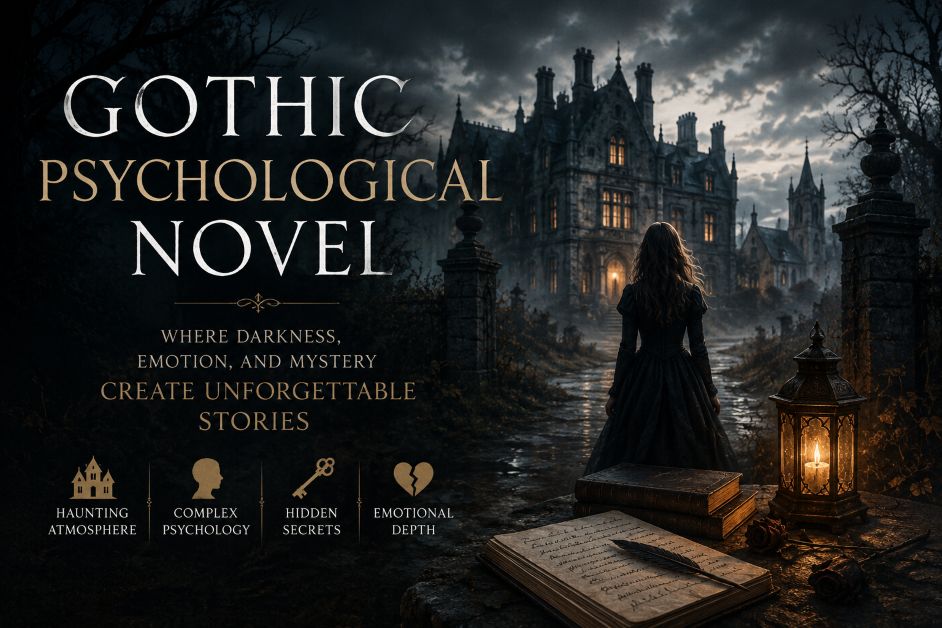
There is something uniquely captivating about stories that combine eerie settings with the complexities of the human mind. A Gothic Psychological Novel goes beyond haunted mansions and shadowy corridors to explore the fears, memories, and emotional struggles hidden within its characters. Rather than relying on graphic horror, this genre builds suspense through psychological conflict, emotional trauma, and the unsettling uncertainty of what is real and what exists only in the mind.
Readers who enjoy Gothic psychological fiction are often drawn to stories where abandoned estates, forgotten churches, isolated villages, and family secrets become symbolic reflections of a character’s inner turmoil, demonstrating the power of psychological storytelling. These novels immerse readers in an atmosphere filled with mystery, suspense, and emotional depth, creating an experience that lingers long after the final page.
Whether the story revolves around hidden memories, generational trauma, identity crisis, or religious symbolism, the power of a Gothic Psychological Novel lies in its ability to transform ordinary settings into emotionally charged landscapes where every shadow seems to conceal another truth.
In this guide, you’ll discover what defines a Gothic Psychological Novel, the essential elements that distinguish it from traditional horror, and why this timeless genre continues to captivate readers seeking suspense with emotional substance.
What Is a Gothic Psychological Novel?
A Gothic Psychological Novel blends the haunting atmosphere of Gothic fiction with the emotional intensity of psychological storytelling. Instead of focusing primarily on supernatural creatures or violent action, these stories explore the fears, memories, guilt, and emotional struggles that shape a person’s perception of reality.
The suspense develops from the characters’ internal battles as much as from the mysteries surrounding them. Readers often question whether the danger is external, psychological, or a combination of both.
Unlike conventional horror, a psychological Gothic novel invites readers to examine the emotional consequences of grief, betrayal, isolation, and unresolved trauma while slowly uncovering long-buried secrets.
Where Gothic Fiction and Psychology Meet
Traditional Gothic fiction emphasizes atmosphere, mystery, and decay.
Psychological fiction explores emotion, memory, and identity.
A Gothic Psychological Novel combines these traditions into stories where abandoned buildings, isolated landscapes, and symbolic objects mirror the emotional state of the protagonist.
Instead of merely asking who committed a crime, readers may find themselves wondering:
- Can the narrator trust their own memories?
- What secrets have remained hidden for decades?
- Is the threat supernatural or psychological?
- Can emotional healing coexist with fear?
These questions create the emotional tension that defines Gothic psychological suspense.
How It Differs From Traditional Horror
Many people mistakenly assume Gothic fiction and horror are identical.
Traditional horror frequently depends upon immediate danger, monsters, or graphic violence.
A Gothic thriller, however, relies upon anticipation.
Fear grows gradually.
Silence becomes unsettling.
Old letters reveal disturbing truths.
A forgotten room becomes more frightening than any monster because it represents memories the characters desperately tried to bury.
The emphasis remains on psychological suspense, emotional uncertainty, and symbolic storytelling rather than shock alone.
Why Readers Love Gothic Psychological Fiction
Readers often connect with dark psychological fiction because it reflects genuine human emotions beneath its mysterious surface.
Common emotional experiences include:
- grief
- guilt
- loneliness
- betrayal
- obsession
- fear
- hope
- redemption
These emotions create relatable characters whose struggles feel authentic despite extraordinary circumstances.
The combination of emotional realism and Gothic atmosphere produces stories that remain memorable long after the mystery has been solved.
The Essential Characteristics of a Gothic Psychological Novel
Although every story is unique, several defining characteristics consistently appear throughout psychological Gothic fiction.
Atmospheric Settings
Location plays a central role in a Gothic mystery novel.
The setting rarely serves merely as background.
Instead, it becomes an extension of the characters’ emotional state.
Common locations include:
- abandoned mansions
- isolated churches
- forgotten cemeteries
- dense forests
- storm-damaged estates
- remote villages
- decaying family homes
These environments create uncertainty while reinforcing the emotional themes within the story.
The surrounding architecture often symbolizes emotional isolation, fear, or unresolved history.
Psychological Conflict
At the heart of every compelling Gothic Psychological Novel lies profound psychological conflict.
Characters may struggle with:
- identity crisis
- obsession
- paranoia
- overwhelming guilt
- suppressed grief
- unresolved trauma
- fear of abandonment
Rather than defeating an external villain alone, they must also confront their own emotional wounds.
This internal struggle deepens the suspense because readers cannot always distinguish between reality and perception.
Family Secrets
Many memorable Gothic suspense stories revolve around family secrets hidden across generations.
A mysterious inheritance.
A forgotten diary.
A concealed crime.
An unexpected letter.
Each discovery gradually reshapes the protagonist’s understanding of the past while revealing how generational trauma continues influencing the present.
Family history often becomes the greatest mystery of all.
Unreliable Narrators
One of the defining features of a psychological Gothic novel is the unreliable narrator.
Trauma, grief, or emotional instability may distort memory.
Readers experience uncertainty alongside the protagonist.
Was that memory accurate?
Did the conversation actually happen?
Can anyone truly be trusted?
This uncertainty transforms ordinary scenes into emotionally charged moments filled with suspense.
Common Themes Found in Gothic Psychological Fiction
The emotional richness of Gothic psychological fiction comes from recurring themes that continue to resonate across generations.
Emotional Trauma
Many protagonists carry invisible emotional wounds long before the central mystery begins.
Experiences involving loss, betrayal, neglect, or abuse continue shaping their decisions throughout the story.
Rather than functioning as a simple backstory, emotional trauma influences every relationship, fear, and revelation.
Isolation
Isolation remains one of the oldest traditions within Gothic Psychological Novels.
Characters frequently find themselves physically or emotionally separated from others.
An isolated estate.
A remote church.
A forgotten village.
A lonely inheritance.
This separation intensifies both fear and introspection, allowing psychological tension to build naturally.
Religious Symbolism
Many Gothic stories use religious symbolism to explore morality, guilt, redemption, and personal transformation.
Ancient churches.
Broken stained-glass windows.
Silent chapels.
Abandoned cemeteries.
These symbols often represent internal struggles rather than supernatural forces, inviting readers to reflect on the emotional meaning behind the imagery.
Moral Corruption
A compelling Gothic Psychological Novel rarely presents simple heroes and villains.
Characters often wrestle with moral ambiguity.
They conceal painful truths.
Protect dangerous secrets.
Question loyalty.
Struggle between justice and revenge.
This complexity makes their emotional journeys feel authentic while strengthening the story’s suspense.
Madness Versus Reality
One of the genre’s most enduring questions asks whether the frightening experiences are genuine—or products of fear, grief, or psychological distress.
This uncertainty lies at the heart of Gothic psychological suspense.
Readers continue turning pages because every revelation challenges their assumptions about reality.
How Gothic Settings Shape the Human Mind
One of the defining qualities of a Gothic Psychological Novel is its ability to transform physical settings into emotional landscapes. The environment is never merely decorative—it becomes an extension of the characters’ thoughts, fears, and unresolved experiences.
Unlike stories where locations simply provide a backdrop, Gothic atmosphere uses architecture and atmosphere to reinforce psychological conflict and deepen emotional suspense.
Architecture as Emotional Symbolism
Old mansions, abandoned churches, forgotten cemeteries, and crumbling estates often symbolize more than history. They reflect the emotional burdens carried by the protagonist.
A locked room may represent a painful memory.
A deteriorating family home may symbolize generational trauma.
A long-neglected chapel may reflect a crisis of faith or unresolved guilt.
This use of symbolic architecture allows readers to experience the character’s emotions through the setting itself.
Darkness, Weather, and Emotional Atmosphere
Storms, heavy fog, endless rain, and dimly lit corridors have long been hallmarks of Gothic suspense.
These elements create uncertainty while reinforcing emotional tension. Darkness does not merely conceal danger—it mirrors confusion, fear, and isolation.
Likewise, changing weather often reflects a character’s emotional transformation. A violent storm may accompany the revelation of family secrets, while a calm sunrise may symbolize hope, healing, or redemption after prolonged suffering.
Nature becomes another silent storyteller, reinforcing the emotional journey without requiring extensive dialogue.
Trauma, Memory, and Identity
Many unforgettable Gothic Psychological Novels examine how past experiences continue shaping present choices. Rather than presenting trauma simply as a dramatic event, these stories explore its lasting emotional consequences.
Childhood Trauma
A difficult childhood frequently becomes the foundation of the mystery.
Experiences involving neglect, betrayal, abandonment, or emotional manipulation influence the protagonist’s relationships, confidence, and perception of reality.
These experiences often remain hidden until the narrative gradually uncovers them, allowing readers to understand why certain fears or behaviors have persisted for years.
Hidden Memories
One of the most compelling devices in psychological Gothic fiction is the gradual return of hidden memories.
Instead of revealing every answer immediately, the story slowly reconstructs forgotten events through journals, conversations, dreams, photographs, or symbolic objects.
As memories resurface, readers discover that the greatest mystery often exists within the protagonist’s own mind.
Identity Crisis
Trauma can profoundly affect personal identity.
Characters may question:
- Who am I without my past?
- Which memories can I trust?
- Have I been manipulated?
- What part of my identity has been shaped by fear?
This identity crisis strengthens the emotional depth of the story while encouraging readers to reflect on how experiences influence personal growth.
Emotional Healing
Although dark psychological fiction explores fear and suffering, many stories also include the possibility of recovery.
Healing rarely arrives through dramatic miracles.
Instead, it develops gradually through honesty, acceptance, forgiveness, healthy relationships, and self-understanding.
This balance between darkness and hope makes the emotional journey feel realistic while adding lasting meaning to the suspense.
Modern Gothic Psychological Fiction
Today’s Gothic mystery novel has evolved beyond castles and supernatural legends.
Modern authors frequently combine classic Gothic atmosphere with contemporary issues, making the genre increasingly relevant for today’s readers.
Themes commonly explored include:
- emotional trauma
- family secrets
- psychological conflict
- identity crisis
- betrayal
- religious symbolism
- generational trauma
- emotional abuse
- psychological recovery
These themes allow readers to connect emotionally with characters while still enjoying the mystery and suspense traditionally associated with Gothic storytelling.
Modern settings may include small towns, isolated communities, historic churches, rural estates, or family homes whose histories conceal long-forgotten truths.
Rather than depending upon supernatural explanations, many contemporary stories reveal that human behavior itself can be the greatest source of fear.
Why the Gothic Psychological Novel Continues to Captivate Readers
The enduring appeal of the Gothic Psychological Novel lies in its ability to combine suspense with emotional authenticity.
Readers are not simply trying to solve a mystery.
They are also witnessing characters confront grief, guilt, fear, betrayal, and the search for redemption.
Because these emotional struggles are universal, the genre remains relevant across generations.
Its enduring popularity also reflects growing interest in stories that examine mental health, resilience, and the lasting effects of trauma with empathy rather than sensationalism.
The combination of psychological suspense, emotional resilience, and atmospheric storytelling creates narratives that resonate long after the final chapter.
Frequently Asked Questions
What is a Gothic Psychological Novel?
A Gothic Psychological Novel combines the mysterious atmosphere of Gothic fiction with deep psychological exploration. Instead of relying on graphic horror, it builds suspense through psychological conflict, emotional tension, symbolism, and complex character development.
Is Gothic fiction always horror?
No. While Gothic fiction often includes fear and suspense, many stories focus on emotional struggles, mystery, and psychological depth rather than supernatural or violent horror.
What themes appear most often?
Common themes include hidden memories, family secrets, generational trauma, identity crisis, religious symbolism, betrayal, psychological conflict, obsession, redemption, and emotional healing.
Why are Gothic settings important?
Settings such as abandoned estates, isolated churches, ancient cemeteries, and forgotten villages reinforce emotional themes while creating the immersive atmosphere that defines Gothic psychological fiction.
Can a Gothic story include hope?
Absolutely. Although many stories explore fear and darkness, they often conclude with personal growth, truth, forgiveness, or psychological recovery, demonstrating that healing can emerge even from the most difficult experiences.
Conclusion
A Gothic Psychological Novel offers far more than eerie settings and mysterious events. It invites readers into emotionally rich stories where psychological suspense, hidden memories, family secrets, and emotional trauma intertwine to create unforgettable narratives.
By blending Gothic atmosphere with deeply human experiences, this genre examines how fear, grief, guilt, and resilience shape identity and influence the search for truth. Symbolic settings, unreliable narrators, and carefully paced revelations transform every hallway, forgotten diary, and abandoned church into reflections of the characters’ inner worlds.
Modern psychological Gothic fiction continues to evolve by addressing themes such as trauma recovery, emotional resilience, religious symbolism, and generational trauma, making these stories both timeless and relevant. Readers are drawn not only to the mystery but also to the emotional journeys that unfold alongside it.
Whether the mystery centers on a long-buried family secret, an isolated estate, or memories that refuse to remain hidden, the lasting power of a Gothic Psychological Novel comes from its ability to remind us that the deepest mysteries are often found within the human mind. Through darkness, symbolism, and emotional truth, these stories reveal that understanding the past is often the first step toward hope, healing, and redemption.
Call to Action
What elements do you think make a Gothic Psychological Novel truly unforgettable? Share your thoughts in the comments below, explore more articles on psychological suspense, emotional trauma, and Gothic psychological fiction, and subscribe for future insights into the storytelling techniques behind compelling psychological thrillers.



0 Comments