
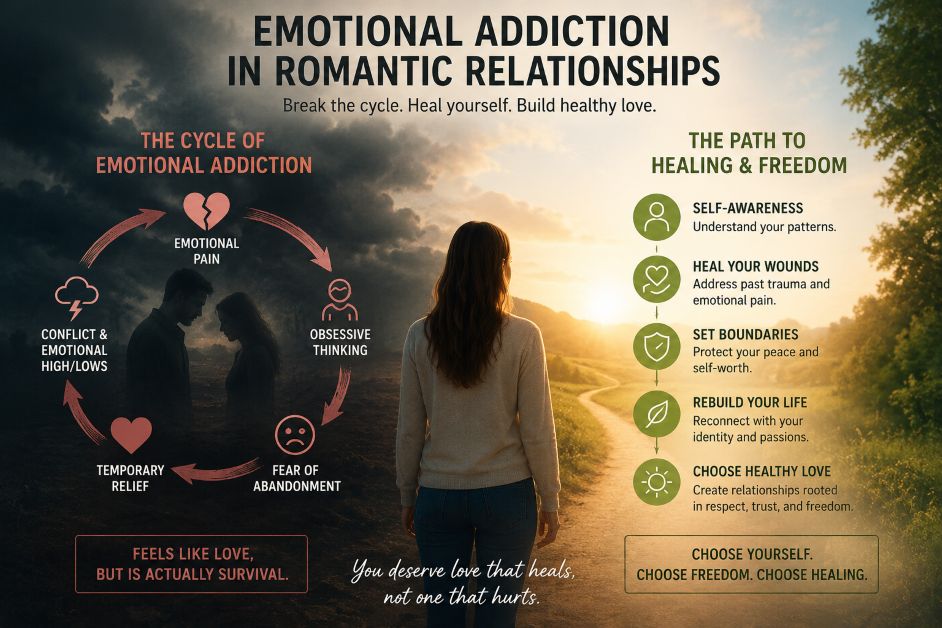
Have you ever felt unable to walk away from a relationship—even when it was hurting you emotionally, mentally, or even physically? Do you constantly crave reassurance, fear abandonment, or feel emotionally “withdrawn” after conflict or separation? If so, you may be experiencing Emotional addiction in romantic relationships.
Unlike healthy love, emotional addiction creates cycles of obsession, dependency, anxiety, and emotional highs and lows that can feel impossible to escape. Many people confuse this intense attachment with passion or soul-deep love, when in reality, it often stems from unresolved trauma, unhealthy attachment patterns, and deep emotional wounds.
In Angie Galler Bowen’s work Living Life on Life’s Terms Is Easier and the Saints Codependent, characters struggle with abusive relationships, emotional dependency, childhood trauma, and codependent attachment patterns that mirror real-life emotional addiction dynamics.
This article explores the signs, causes, psychological effects, and healing process behind Emotional addiction in romantic relationships so you can recognize unhealthy patterns and begin building healthier emotional connections.
What Is Emotional Addiction in Romantic Relationships?
Emotional addiction in romantic relationships occurs when a person becomes psychologically dependent on the emotional intensity, validation, or attachment they experience with a partner. Instead of feeling secure and grounded in love, the relationship becomes emotionally compulsive.
This form of addiction often involves:
- obsessive thinking
- fear of abandonment
- emotional dependency
- toxic attachment cycles
- trauma bonding
- inability to leave unhealthy relationships
People experiencing relationship addiction often confuse emotional chaos with love because the nervous system becomes conditioned to emotional highs and lows.
Emotional Addiction vs Genuine Love
Healthy love feels:
- emotionally safe
- respectful
- balanced
- supportive
- stable
Emotional addiction feels:
- obsessive
- unpredictable
- anxiety-driven
- emotionally exhausting
- dependent on validation
Real love promotes emotional freedom. Emotional addiction creates emotional captivity.
Signs of Emotional Addiction in Romantic Relationships
Recognizing the symptoms is the first step toward healing. Many signs overlap with codependency, anxious attachment, and trauma bonding.
Obsessive Thoughts About Your Partner
You may constantly:
- check your phone
- overanalyze texts
- replay conversations
- feel consumed by the relationship
Your emotional state becomes dependent on your partner’s attention or approval.
Fear of Being Alone
People with emotional dependency often stay in unhealthy relationships because loneliness feels unbearable. Even emotionally abusive relationships may feel safer than abandonment.
In Saints Codependent, Libby remains emotionally attached despite escalating abuse because emotional survival had become tied to attachment itself.
Losing Your Identity
Another major sign is abandoning:
- hobbies
- friendships
- goals
- values
- emotional boundaries
Your sense of self begins revolving entirely around the relationship.
Emotional Withdrawal Symptoms
After breakups or conflict, people may experience:
- panic
- anxiety
- insomnia
- depression
- emotional cravings
- physical exhaustion
This is why toxic relationships can feel literally addictive.
Why Emotional Addiction Happens
Childhood Trauma and Attachment Wounds
Many emotionally addictive relationships begin with unresolved childhood trauma.
Experiences such as:
- emotional neglect
- abandonment
- abuse
- inconsistent caregiving
- emotional invalidation
can shape unhealthy attachment patterns in adulthood.
Children raised in emotionally unsafe environments often grow into adults who associate love with:
- unpredictability
- fear
- emotional intensity
- rescuing others
- suffering for affection
Attachment Styles and Emotional Dependency
Attachment theory plays a major role in relationship addiction.
Anxious Attachment
People with anxious attachment:
- fear rejection
- seek constant reassurance
- become emotionally preoccupied with partners
Avoidant Attachment
Avoidant individuals:
- struggle with intimacy
- emotionally withdraw
- trigger insecurity in anxious partners
This anxious-avoidant cycle often creates emotional addiction.
The Brain Chemistry Behind Emotional Addiction
Toxic relationships affect the brain similarly to addictive substances.
During emotional highs and lows, the brain releases:
- dopamine
- cortisol
- oxytocin
- adrenaline
This biochemical cycle reinforces compulsive attachment.
Intermittent affection followed by emotional withdrawal creates powerful psychological dependency.
Trauma Bonding and Toxic Relationship Cycles
One of the strongest forms of emotional addiction in romantic relationships is trauma bonding.
Trauma bonds form when:
- affection and abuse alternate
- emotional pain is followed by temporary comfort
- the victim becomes attached to the cycle itself
This explains why many people struggle to leave emotionally or physically abusive relationships.
Saints Codependent: Good From Evil, Libby repeatedly rationalizes harmful behavior while trying to “focus on the good” in her abusive partner. This mirrors real trauma-bonding patterns where victims emotionally cling to brief moments of kindness.
Why Toxic Relationships Feel Addictive
Toxic relationships create emotional unpredictability. The nervous system becomes conditioned to:
- emotional chaos
- conflict-reconciliation cycles
- validation deprivation
- emotional survival mode
Eventually, calm and healthy love may even feel “boring” because the brain has adapted to emotional intensity.
The Mental and Physical Effects of Emotional Addiction
Emotional addiction affects both psychological and physical health.
Mental Health Effects
People may experience:
- anxiety
- depression
- low self-worth
- emotional exhaustion
- obsessive thinking
- panic attacks
Physical Effects
Chronic emotional stress can contribute to:
- sleep problems
- fatigue
- digestive issues
- headaches
- nervous system dysregulation
Long-term emotional dependency can severely damage emotional resilience and self-esteem.
How to Break Emotional Addiction in Romantic Relationships
Healing from relationship addiction requires emotional awareness, boundaries, and nervous system healing.
1. Acknowledge the Pattern Without Shame
Many people blame themselves for emotional dependency. However, emotional addiction often develops from survival mechanisms learned early in life.
Self-awareness—not self-condemnation—is the beginning of healing.
2. Create Emotional Distance
This may involve:
- limiting contact
- ending toxic communication cycles
- reducing social media monitoring
- establishing emotional boundaries
Distance helps interrupt addictive emotional reinforcement patterns.
3. Regulate Your Nervous System
Healing requires calming the body, not just the mind.
Helpful practices include:
- mindfulness
- deep breathing
- somatic therapy
- exercise
- journaling
- prayer or meditation
4. Rebuild Your Identity
Healthy recovery involves rediscovering:
- personal goals
- passions
- friendships
- emotional independence
People recovering from emotional dependency must learn to feel emotionally complete outside romantic validation.
5. Seek Trauma-Informed Support
Professional support may include:
- cognitive behavioral therapy (CBT)
- EMDR therapy
- attachment-focused therapy
- support groups
- trauma-informed counseling
Recovery becomes easier when emotional wounds are addressed at their root.
Can Emotionally Addicted Relationships Be Saved?
Sometimes healing together is possible—but only when both people:
- acknowledge unhealthy patterns
- commit to accountability
- establish healthy boundaries
- seek professional help
However, if the relationship involves:
- ongoing abuse
- manipulation
- intimidation
- emotional control
leaving may be the healthiest and safest option.
As shown in the reference narrative, emotional healing often begins when individuals finally recognize that suffering is not the same as love.
Faith, Self-Worth, and Emotional Healing
A powerful but often overlooked part of recovery is rebuilding self-worth.
Many emotionally addicted individuals believe they must:
- earn love
- rescue others
- tolerate pain to keep connection
- sacrifice themselves emotionally
But healthy love does not require self-destruction.
The reference manuscript repeatedly emphasizes themes of forgiveness, healing, emotional growth, and learning to separate compassion from unhealthy attachment.
Healing often begins when people realize:
- they deserve emotional safety
- boundaries are healthy
- love should not feel like survival
- peace is not weakness
Frequently Asked Questions About Emotional Addiction
Is emotional addiction the same as codependency?
Not exactly. Codependency involves excessive emotional reliance and caretaking behaviors, while emotional addiction focuses more on compulsive attachment and emotional craving.
Why do toxic relationships feel impossible to leave?
Because trauma bonds and dopamine-driven attachment cycles create emotional dependency similar to addiction.
Can therapy help emotional addiction?
Yes. Trauma-informed therapy can help address attachment wounds, nervous system dysregulation, and unhealthy relationship patterns.
Is emotional withdrawal real?
Absolutely. Emotional separation can trigger anxiety, depression, panic, and physical stress responses similar to withdrawal symptoms.
Emotional Addiction in Romantic Relationships
You are not weak for struggling with emotional attachment. Many addictive relationship patterns are rooted in childhood wounds, trauma, abandonment fears, and unmet emotional needs.
The good news is that awareness changes everything.
Healthy love should bring:
- emotional safety
- peace
- mutual respect
- stability
- emotional freedom
Not fear, obsession, or emotional survival.
Emotional addiction in romantic relationships can feel overwhelming, confusing, and deeply painful – but healing is possible.
By recognizing unhealthy attachment patterns, rebuilding self-worth, and seeking support when needed, you can break free from destructive cycles and create relationships rooted in genuine emotional health rather than addiction.
If this article resonated with you, consider sharing it with someone who may also be struggling with relationship addiction, trauma bonding, or emotional dependency. Healing often begins with understanding.



0 Comments
Trackbacks/Pingbacks