

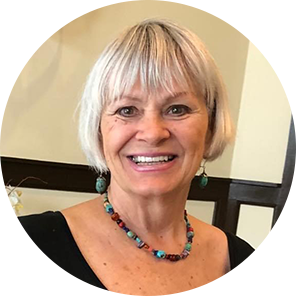
The *Who* is Angie Galler Bowen. Click on the first tab to read a little about who I am… Now… and then… (before becoming an author). In the first blog, I explored several “parts” of myself in the who category because it takes many “parts” of ourselves to make the “whole” person.
This second blog… What? is presented below:
The dictionary tells us that an author is “the originator or creator of a plan or idea.” I love this description of what I do.
I “create” an idea and expound on it. Literally. But, it doesn’t all happen at once, and in my case, it doesn’t happen according to any specific plan. Therefore, Webster got it right in at least one aspect. I create, without using a formal template or any specific design. For example, unlike some fiction writers, I do not outline my chapters, then fill them in. On the contrary, I write the first chapter with an emphasis on the primary plot and character(s). Then the second chapter introduces and focuses on the subplot and character(s).
For example, in my first novel, Saints Codependent Good From Evil, the first chapter introduces Libby, Norma and Constance, three generations of strong women, struggling to do the “Christian” thing. Abusive husbands, trauma from childhood sexual abuse and a strong need to “belong” (whether to society or to a marriage vow that isn’t working according to plan) interfere with the intent to do the “Christian” thing.
Libby, Norma and Constance are the primary characters, the author chooses to introduce and begin to develop them in the first chapter, so as to attract the reader to their personalities, including their strengths, weaknesses.
The second chapter develops Jerry and Kenny, the men to whom Libby and Norma are married. Though both men are briefly introduced in the first chapter, the author chooses to develop the primary characters first. So, the second chapter is used to develop the secondary characters, who by the way, are equally as important as the primary characters. After all, how would a story develop if the primary characters didn’t have anyone to interact with? Thus “creating” the novel.
The same format is used in the second novel. Both novels choose to alternate between chapters so that the plot and subplot get equal attention. This author will most likely write all her novels using this format because it works for her.
I think that’s part of being an author, doing what works for the individual writer or creator. I also think it’s what works in real life. The key is balance, whether in writing a novel or in living life. The second novel is entitled Living Life On Life’s Terms because it fits…for all of us!
Probably, if truth be known, most authors, of fiction anyway, inject a part of themselves into their novels. To me, it just comes naturally. I love to teach, and to help people figure out the etiology of their choices and find a better path.
My novels, a mixed genre give the reader a riveting ride, a “story” about ordinary people trying to enjoy life, yet make it count for something. With lots of psychological twists and turns, they keep you on the edge of your seat. Authors choose what style they will adopt. For me, that part was easy. Teach and entertain.
That’s my personal definition of “author” in a nutshell.
Stay tuned for the third blog: “When?”


0 Comments