
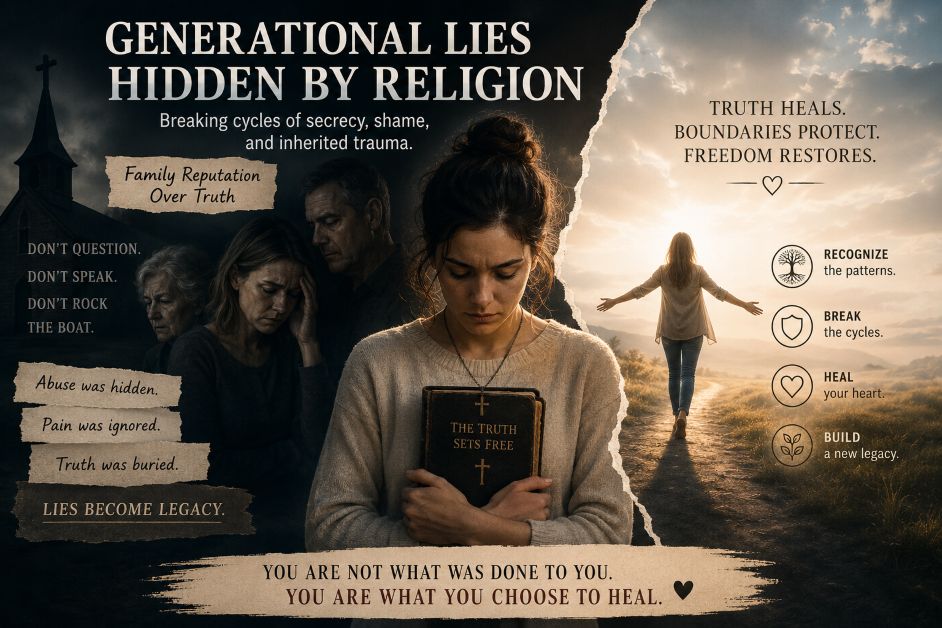
The reality of Generational lies hidden by religion is often more complex than simple dishonesty. These inherited narratives can involve suppressed family histories, hidden abuse, distorted beliefs about worthiness, and patterns of silence that discourage questioning. Over time, these messages become accepted as truth, even when they cause emotional harm.
Family stories shape how we see ourselves, others, and the world around us. In many households, religious beliefs provide comfort, purpose, and a sense of belonging. However, in some families, faith can become intertwined with secrecy, fear, and unspoken rules that are passed down from generation to generation.
Many people begin to recognize these patterns only after experiencing anxiety, identity confusion, strained relationships, or a growing sense that something within their family system does not align with reality. Understanding Generational lies hidden by religion is an important step toward healing, personal freedom, and breaking harmful cycles for future generations.
What Are Generational Lies Hidden by Religion?
Generational lies hidden by religion are false, distorted, or incomplete family narratives that are reinforced through religious beliefs, traditions, or authority structures. These narratives often serve to protect reputations, maintain control, or avoid uncomfortable truths.
Examples may include:
- denying family abuse
- hiding addiction problems
- protecting harmful authority figures
- suppressing emotional expression
- discouraging questions about family history
- teaching fear instead of healthy faith
Over time, these stories become deeply embedded within family culture.
How Family Beliefs Become Generational Truths
Children learn about life primarily through their families. When certain beliefs are repeated consistently, they often become accepted without question.
Statements such as:
- “Good families don’t talk about private problems.”
- “Questioning authority is disrespectful.”
- “Forgiveness means staying silent.”
- “Family reputation comes first.”
can eventually shape an individual’s worldview and emotional development.
Some experts describe this pattern as generational lying, where false narratives become normalized and passed down across multiple generations.
The Difference Between Faith and Family Narratives
Healthy faith encourages honesty, accountability, compassion, and growth. However, family narratives sometimes use religion to justify secrecy or control.
Understanding the difference between spiritual values and inherited family beliefs is crucial when addressing religious family secrets.
How Religion Can Be Used to Protect Family Secrets
In some communities, these dynamics become even more harmful when spiritual leaders hiding dangerous secrets use authority and fear to silence difficult conversations.
Religion itself is not the problem. The problem occurs when faith is used as a shield to avoid accountability.
Many families struggling with family dysfunction and religion may unintentionally use spiritual language to suppress difficult conversations.
“Honor the Family” at Any Cost
Some families prioritize image over truth.
When maintaining appearances becomes more important than addressing harm, family members may be pressured to remain silent about abuse, betrayal, addiction, or misconduct.
When Reputation Matters More Than Truth
Protecting a family name can sometimes lead to generations of secrecy.
Children raised in these environments often learn that preserving appearances is more important than acknowledging reality.
Silence Framed as Spiritual Obedience
One of the most damaging forms of religious manipulation occurs when silence is presented as a spiritual virtue.
Victims may be told:
- “Pray about it and move on.”
- “Don’t create division.”
- “God wants you to forgive immediately.”
While forgiveness has value, it should never be used to avoid accountability or healing.
Common Generational Lies Passed Through Religious Families
Many harmful beliefs become normalized through repetition.
In some cases, these beliefs resemble broader lies of religion that prioritize conformity, fear, or silence over truth and accountability.
“We Don’t Talk About Family Problems”
This belief often protects dysfunction while preventing healing.
“Forgive and Forget No Matter What Happened”
This message can create confusion between forgiveness and self-protection.
“Questioning Authority Is Sinful”
Fear of challenging leaders or family members is common in environments influenced by faith and family control.
“Keeping Secrets Protects the Family”
In reality, secrecy often protects unhealthy systems rather than healthy relationships.
“Suffering Is Always God’s Will”
This belief may discourage people from seeking help or leaving harmful situations.
The Psychological Impact of Generational Religious Lies
Years of secrecy, shame, and control can create unhealthy patterns of emotional dependency that affect relationships well into adulthood.
The emotional consequences of religious trauma passed through generations can be significant.
Anxiety and Chronic Shame
Many individuals raised within rigid systems develop persistent anxiety and self-doubt.
They may feel responsible for problems that were never theirs to carry.
Identity Confusion
People often struggle to separate their authentic beliefs from inherited expectations.
This confusion can affect relationships, career decisions, and personal growth.
Difficulty Trusting Yourself
A common outcome of religious manipulation is learning to distrust personal thoughts, emotions, and instincts.
Many adults spend years rebuilding confidence in their own judgment.
Emotional Suppression and People-Pleasing
Children raised in environments focused on compliance often become adults who struggle to express needs, establish boundaries, or advocate for themselves.
Intergenerational Trauma Hidden by Religion
One of the most overlooked aspects of intergenerational trauma is how it can remain concealed beneath family traditions and religious practices.
How Trauma Passes From One Generation to the Next
Trauma does not disappear simply because people stop talking about it.
Unresolved experiences can influence:
- parenting styles
- emotional regulation
- attachment patterns
- communication habits
This is why generational trauma recovery often requires examining family history.
Discussions about generational curses often arise when families attempt to explain recurring emotional struggles, dysfunction, or trauma patterns.
Family Systems and Religious Conditioning
Family systems create unwritten rules about what can and cannot be discussed.
When religion becomes intertwined with these rules, challenging them may feel emotionally dangerous.
Inherited Fear, Guilt, and Shame
Many people discover they have inherited emotional burdens that originated long before they were born.
These patterns often include:
- excessive guilt
- fear of failure
- fear of disappointing others
- chronic shame
Why Trauma Often Remains Unspoken
Trauma frequently survives through silence.
Families may avoid discussing painful events because doing so threatens long-established narratives.
Signs Your Family May Be Protecting Generational Lies
Several warning signs suggest the presence of family secrets protected by religion.
Topics Nobody Is Allowed to Discuss
Certain subjects trigger immediate discomfort or shutdown.
Family Members Who Are Always Blamed
Many families assign one person the role of scapegoat while ignoring deeper systemic issues.
Extreme Reactions to Questions
Simple questions may provoke defensiveness, anger, or accusations of disloyalty.
Contradictions Between Public and Private Behavior
Families sometimes present one image publicly while living a very different reality privately.
These contradictions are common indicators of signs of generational lies in families.
Faith Versus Religious Control
Not all religious environments are harmful.
Understanding the distinction between healthy faith and unhealthy control is essential.
Healthy Faith Encourages Truth
Authentic spirituality supports honesty, growth, accountability, and compassion.
Spiritual Growth Requires Honesty
Healing cannot occur when truth is constantly avoided.
Why Accountability Matters
Healthy communities welcome questions and encourage transparency.
Distinguishing Faith From Manipulation
Learning the difference between genuine spirituality and faith versus family manipulation can be transformative.
Faith promotes freedom.
Manipulation promotes control.
Breaking Generational Lies Hidden by Religion
Healing begins when individuals decide to challenge inherited narratives.
For many people, this journey involves healing the family tree by confronting unhealthy patterns and creating healthier legacies for future generations.
Step 1: Recognize the Pattern
Awareness is the foundation of change.
Pay attention to recurring beliefs, family rules, and emotional reactions.
Step 2: Challenge Inherited Beliefs
Ask yourself:
- Is this belief true?
- Who taught me this?
- Does it promote healing or fear?
This process helps identify how religion hides family secrets and how those messages continue to influence daily life.
Step 3: Seek Safe Support
Support may come from:
- therapists
- support groups
- trusted friends
- healthy faith communities
Outside perspectives often help expose unhealthy patterns.
Step 4: Develop Healthy Boundaries
Boundaries protect emotional well-being while supporting personal growth.
Step 5: Create a New Family Narrative
Breaking cycles does not mean rejecting your family.
It means choosing honesty, accountability, and healing over secrecy.
Healing From Religious Shame and Family Secrecy
Many survivors eventually begin the process of rebuilding identity after emotional trauma as they separate inherited beliefs from their authentic sense of self.
Recovery involves addressing both emotional wounds and inherited beliefs.
Rebuilding Self-Trust
Many survivors of religious trauma who passed through generations must learn to trust themselves again.
Processing Anger and Grief
It is normal to feel sadness, disappointment, anger, or confusion when confronting family realities.
Letting Go of Inherited Guilt
A major part of healing from inherited religious shame involves recognizing which burdens belong to you and which do not.
Learning to Speak Your Truth
Finding your voice can be one of the most powerful acts of healing.
Honest conversations often create opportunities for personal growth and deeper authenticity.
Can You Keep Your Faith While Breaking Generational Cycles?
Many people fear that questioning family narratives means abandoning spirituality.
In reality, the opposite is often true.
Separating Spirituality From Family Dysfunction
You can reject unhealthy family patterns without rejecting your beliefs.
Creating Healthy Personal Beliefs
Developing values based on personal reflection rather than fear can strengthen faith.
Finding Communities That Value Truth
Seek environments that encourage questions, accountability, and emotional safety.
Building Faith on Freedom Rather Than Fear
The journey of breaking religious trauma cycles often leads people toward healthier, more authentic spirituality.
Final Thoughts on Generational Lies Hidden by Religion
The impact of Generational lies hidden by religion can extend across decades, shaping identities, relationships, and emotional health in ways many families never fully recognize.
Yet cycles are not destiny.
By examining religious family secrets, addressing intergenerational trauma, challenging inherited guilt, and pursuing generational trauma recovery, individuals can create healthier futures for themselves and future generations.
Whether you are exploring the emotional effects of religious secrecy, questioning long-held family narratives, or working toward recovering from spiritual family control, remember that healing begins with truth.
Readers interested in stories exploring faith, family secrets, trauma, and resilience may enjoy this psychological thriller novel that examines the emotional consequences of hidden truths.
Honesty may feel uncomfortable at first, but it creates space for freedom, growth, and genuine connection.
The courage to confront the past can become the foundation for a healthier future—one built not on fear or secrecy, but on authenticity, compassion, and hope.



0 Comments