
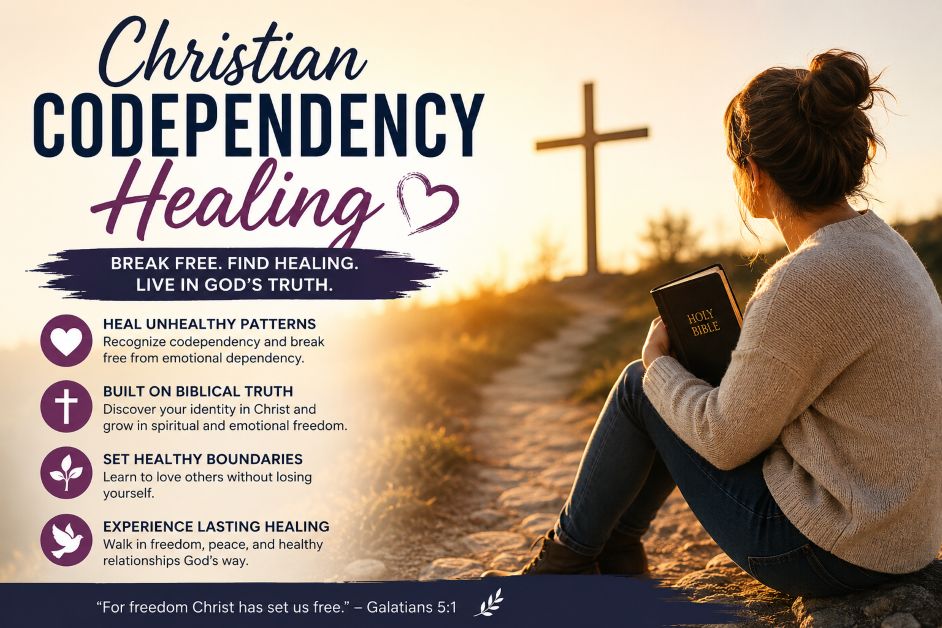
Have you ever found yourself feeling responsible for someone else’s happiness, emotions, or choices? Do you struggle to say no because you fear rejection or believe that putting your own needs first is selfish? If so, you may be experiencing Christian Codependency Healing as a journey you didn’t realize you needed.
Many Christians genuinely desire to love, serve, and care for others. These are admirable qualities rooted in faith. However, there is an important difference between biblical love and unhealthy emotional dependence. When your identity, peace, or self-worth becomes dependent on another person’s approval, your relationships can become emotionally exhausting instead of spiritually enriching.
The good news is that Christian Codependency Healing is possible. Scripture teaches believers to love others, but it also encourages wisdom, healthy relationships, personal responsibility, and dependence on God rather than emotional dependence on people. Healing is not about becoming selfish—it is about learning to love from a place of freedom instead of fear.
This guide explores the signs, causes, and practical steps toward biblical codependency recovery, helping you develop healthy Christian relationships while strengthening your relationship with God.
What Is Christian Codependency Healing?
Christian Codependency Healing is the process of recognizing unhealthy relationship patterns and replacing them with biblical principles that promote emotional health, healthy boundaries, and spiritual maturity.
Unlike selfishness, codependency often appears compassionate on the surface. People struggling with Christian codependency frequently sacrifice their own emotional well-being to meet the constant needs of others. They may believe that saying “yes” to everyone is an expression of faith, even when it leads to burnout, resentment, or emotional exhaustion.
True faith-based healing involves learning that God never intended believers to carry burdens that belong to someone else.
What Is Codependency?
Codependency is a pattern in which a person’s identity, emotions, or sense of worth becomes overly connected to another person’s behavior or approval.
Someone experiencing codependent relationships may:
- constantly seek validation
- avoid conflict at all costs
- neglect personal needs
- feel guilty when setting limits
- fear of disappointing others
- struggle to make independent decisions
These patterns often develop gradually and can affect marriages, friendships, family relationships, and church communities.
What Makes Codependency Different for Christians?
For Christians, codependency can become especially confusing because biblical teachings emphasize love, humility, compassion, forgiveness, and service.
Unfortunately, these beautiful principles are sometimes misunderstood.
Some believers assume they should:
- never say no
- always put others first
- ignore emotional abuse
- tolerate manipulation
- sacrifice their mental health to keep the peace
However, biblical love never requires abandoning wisdom or personal responsibility.
Healthy service flows from spiritual maturity—not from fear, guilt, or unhealthy attachment.
Biblical Love Versus Unhealthy Attachment
One of the most important distinctions in Christian relationship healing is understanding the difference between genuine love and emotional dependency.
Biblical love encourages:
- compassion
- honesty
- mutual respect
- healthy boundaries
- accountability
- grace
In contrast, unhealthy attachment often involves:
- fear of abandonment
- emotional control
- excessive people-pleasing
- constant anxiety
- loss of identity
- dependence on another person’s approval
Recognizing this difference is the first step toward how to heal from Christian codependency.
Signs You May Be Struggling With Christian Codependency
Many people do not realize they have developed codependent habits because those behaviors may have been praised for years.
If several of the following describe you, it may be time to begin your journey toward Christian Codependency Healing.
Constant Need for Approval
Do you feel anxious when someone is upset with you?
Many individuals experiencing emotional dependency constantly seek reassurance that others are happy with them.
Their emotional stability rises and falls depending on other people’s opinions.
Feeling Responsible for Everyone’s Happiness
One of the clearest signs of Christian codependency is believing it is your responsibility to fix everyone’s problems.
You may feel guilty when someone is disappointed, even if you did nothing wrong.
Healthy compassion is different from carrying responsibilities that belong to others.
Fear of Saying No
People trapped in people-pleasing often struggle to establish healthy boundaries.
Instead of saying no when necessary, they overcommit, become overwhelmed, and eventually experience emotional exhaustion.
Learning to say no respectfully is not unloving—it is an important part of Christian emotional healing.
Difficulty Setting Biblical Boundaries
Some Christians mistakenly believe boundaries are selfish.
In reality, biblical boundaries protect relationships by encouraging honesty, respect, and personal responsibility.
Healthy boundaries clarify:
- what you can give
- what you cannot control
- what belongs to someone else
They help prevent resentment while strengthening healthier relationships.
Losing Your Identity in Relationships
Another warning sign is forgetting who you are apart from caring for others.
Many people involved in codependent relationships lose sight of their own goals, interests, dreams, and purpose.
This often leads to emotional burnout and confusion about one’s identity.
What Causes Christian Codependency?
Codependency rarely develops overnight.
It usually begins with experiences that teach people their value depends on pleasing others or avoiding conflict.
Understanding these roots is an essential step toward healing emotional dependency through faith.
Childhood Emotional Neglect
Many adults struggling with codependency experienced inconsistent emotional support during childhood.
Children who learn that love must be earned often become adults who constantly seek approval.
These early experiences can create deep attachment wounds that influence future relationships.
Parent-Child Emotional Enmeshment
In some families, children become responsible for meeting a parent’s emotional needs.
This pattern, known as emotional enmeshment, makes it difficult to develop healthy independence later in life.
Adults raised in these environments often struggle to separate their own emotions from those of others.
Religious Guilt and Shame
Some individuals grow up believing that self-care is selfish or that questioning unhealthy behavior demonstrates weak faith.
These distorted beliefs create religious guilt and chronic shame.
Healthy Christianity encourages sacrificial love, but it does not encourage emotional exploitation.
Understanding the difference supports Christian counseling for codependency and long-term recovery.
Fear of Rejection
The fear of disappointing others often fuels people-pleasing.
Instead of making decisions based on wisdom, individuals may choose whatever keeps everyone else comfortable.
Unfortunately, this habit often leads to resentment, exhaustion, and emotional instability.
Trauma and Emotional Abuse
Many survivors of emotional abuse recovery discover that their codependent patterns developed as survival strategies.
Children and adults exposed to manipulation, criticism, or unpredictable relationships often become hyperaware of other people’s emotions.
Over time, they learn to ignore their own needs in an effort to avoid conflict.
Recognizing these patterns is the beginning of Christian healing after emotional abuse and allows believers to pursue healthier, more balanced relationships rooted in truth rather than fear.
How Faith Can Be Misused to Reinforce Codependency
Faith should bring freedom, hope, and healing. Unfortunately, biblical teachings can sometimes be misunderstood or misapplied in ways that reinforce unhealthy relationship patterns.
For example, some people confuse unconditional love with unlimited access to their time, energy, or emotional well-being. Others believe forgiveness requires remaining in harmful situations or that setting boundaries reflects a lack of compassion.
These misunderstandings can keep individuals trapped in unhealthy cycles instead of experiencing the freedom found in Christ.
In the next section, we’ll explore the biblical principles that support lasting Christian Codependency Healing, practical recovery steps, and how to rebuild your identity through faith while developing emotionally healthy, God-honoring relationships.
Biblical Principles That Support Healing
Lasting Christian Codependency Healing begins with understanding that God desires healthy, life-giving relationships—not relationships built on fear, guilt, or emotional exhaustion. As you begin biblical codependency recovery, replacing unhealthy beliefs with biblical truth becomes the foundation for lasting transformation.
Your Identity in Christ
One of the greatest challenges of Christian codependency is placing your identity in how much you do for others rather than in who God says you are.
When your worth depends on approval, you may constantly seek validation through service, perfectionism, or people-pleasing. However, your identity is not earned through performance. Recognizing your identity in Christ allows you to serve others from a place of confidence rather than insecurity.
Healthy Christian emotional healing begins when your value is rooted in God’s love instead of other people’s opinions.
God’s Design for Healthy Christian Relationships
Healthy relationships reflect mutual respect, honesty, compassion, accountability, and trust.
Strong healthy Christian relationships include:
- open communication
- mutual responsibility
- emotional safety
- healthy conflict resolution
- personal growth
- balanced support
Healthy love encourages both people to grow rather than one person carrying all the emotional responsibility.
Wisdom, Discernment, and Biblical Boundaries
One misconception surrounding Christian relationship healing is that boundaries are selfish.
In reality, biblical boundaries demonstrate wisdom. They help clarify what you are responsible for—and what belongs to someone else.
Healthy boundaries protect emotional well-being while strengthening relationships built on respect instead of obligation.
Grace Without Enabling
Offering grace does not mean enabling destructive behavior.
Learning to love someone without rescuing them from every consequence is an important part of faith-based healing.
Grace allows compassion.
Enabling prevents growth.
Understanding this difference supports healthier decisions and stronger relationships.
Practical Steps for Christian Codependency Healing
Recovery is a process rather than a single event. The following practical steps can help you move toward how to heal from Christian codependency while strengthening both emotional health and spiritual maturity.
Step 1: Recognize Unhealthy Patterns
Awareness is the beginning of change.
Take time to notice situations where fear, guilt, or approval influence your decisions.
Ask yourself:
- Am I acting from love or fear?
- Am I trying to control someone else’s emotions?
- Am I neglecting my own needs?
Honest reflection helps identify unhealthy habits before they become automatic.
Step 2: Renew Your Thinking
Many unhealthy beliefs originate from childhood experiences, attachment wounds, or distorted messages about relationships.
Replacing those beliefs with healthier perspectives supports healing emotional dependency through faith and encourages long-term emotional growth.
Step 3: Build Healthy Boundaries
Healthy boundaries are one of the most important tools in Christian counseling for codependency.
Boundaries may include:
- saying no respectfully
- protecting personal time
- communicating expectations clearly
- refusing emotional manipulation
- allowing others to accept responsibility for their own choices
Boundaries strengthen relationships because they create honesty instead of resentment.
Step 4: Develop Emotional Awareness
Many people experiencing emotional dependency have spent years ignoring their own emotions.
Learning to identify feelings without judging them is an important step toward healing.
Journaling, reflection, and mindful self-awareness can help you better understand emotional triggers and unhealthy relationship patterns.
Step 5: Learn Healthy Communication
Healthy communication includes honesty, empathy, and respect.
Rather than avoiding conflict, practice expressing your needs calmly and respectfully.
This skill strengthens healthy Christian relationships while reducing anxiety and resentment.
Step 6: Seek Wise Support
Recovery becomes easier when you are surrounded by emotionally healthy people.
Trusted mentors, professional counselors, support groups, or mature Christian friends can provide encouragement, accountability, and perspective throughout codependency recovery.
Step 7: Practice Consistent Prayer and Reflection
Prayer helps you surrender unhealthy fears while strengthening your trust in God.
Combined with regular reflection, prayer allows you to evaluate your motives, recognize unhealthy habits, and celebrate personal growth.
Healing After Emotional Abuse and Manipulation
Many individuals pursuing Christian healing after emotional abuse discover that codependency developed as a response to unhealthy relationships.
Recovering From Narcissistic Relationships
Survivors of controlling relationships often struggle with self-doubt, confusion, and chronic guilt.
Recovery involves recognizing manipulation, rebuilding confidence, and learning to trust yourself again.
Healing from codependent relationships requires replacing fear-based patterns with healthier ways of relating to others.
Rebuilding Trust
Healing does not mean trusting everyone immediately.
Instead, trust should grow through consistent honesty, respect, and healthy behavior over time.
Overcoming Shame
Shame often convinces people they are responsible for everyone else’s emotions.
Replacing shame with truth is an essential part of Christian emotional healing.
Mistakes do not define your worth.
Neither does another person’s opinion.
Restoring Emotional Safety
Emotionally healthy relationships provide security rather than fear.
As you continue your recovery, seek relationships that encourage honesty, kindness, accountability, and mutual respect.
Rebuilding Your Identity Through Faith
Many people emerging from codependent relationships realize they no longer know who they are apart from caring for others.
Recovery includes rediscovering your strengths, interests, goals, and purpose.
Replacing Lies With Truth
Unhealthy beliefs often sound like:
- I must earn love.
- My value depends on helping others.
- I cannot disappoint anyone.
Replacing these lies with healthier beliefs strengthens self-worth in Christ and promotes emotional resilience.
Rediscovering Your Purpose
Your purpose extends far beyond meeting other people’s expectations.
Developing your gifts, passions, and calling supports personal growth through faith while creating healthier relationships.
Building Healthy Confidence
Confidence grows as you make wise decisions, practice boundaries, and trust your ability to navigate difficult situations.
Healthy confidence is rooted in truth—not perfection.
Living From Freedom Instead of Fear
One of the greatest goals of Christian Codependency Healing is learning to make decisions from love instead of fear.
Freedom allows you to serve others joyfully without sacrificing your emotional well-being.
Breaking Generational Patterns of Codependency
Many families unknowingly pass unhealthy relationship patterns from one generation to the next.
Recognizing these cycles creates opportunities for healing.
Recognizing Family Cycles
Patterns such as people-pleasing, emotional control, poor boundaries, and family dysfunction often repeat across generations.
Awareness is the first step toward lasting change.
Creating New Relationship Patterns
Healthy families encourage:
- honest communication
- emotional safety
- personal responsibility
- mutual respect
- balanced support
Choosing these values helps break unhealthy cycles for future generations.
Raising Emotionally Healthy Families
Parents and caregivers play an important role in modeling healthy relationships.
Teaching children emotional awareness, healthy communication, and appropriate boundaries creates stronger families built on trust rather than fear.
Frequently Asked Questions About Christian Codependency Healing
Is codependency a sin?
Codependency itself is generally understood as an unhealthy relationship pattern rather than a specific sin. However, recognizing these behaviors allows individuals to pursue healthier relationships grounded in wisdom, love, and personal responsibility.
Can Christians have healthy boundaries?
Yes. Biblical boundaries promote respect, honesty, and emotional health while allowing people to love others without enabling unhealthy behavior.
Can prayer alone heal codependency?
Prayer is an important part of faith-based healing, but many people also benefit from wise counseling, healthy relationships, emotional growth, and practical recovery strategies.
How long does recovery take?
Recovery varies for each individual. Healing is often gradual and involves consistent practice, self-awareness, support, and personal growth.
When should I seek Christian counseling for codependency?
If unhealthy relationship patterns continue to interfere with daily life, emotional well-being, or spiritual growth, professional support can be an important part of recovery.
Final Thoughts on Christian Codependency Healing
The journey of Christian Codependency Healing is not about becoming less loving or less compassionate. It is about learning to love wisely, serve freely, and build relationships that reflect truth, respect, and emotional health.
As you continue biblical codependency recovery, remember that lasting transformation happens one step at a time. By developing healthy Christian relationships, practicing biblical boundaries, strengthening your identity in Christ, and embracing personal growth through faith, you can experience greater peace, healthier connections, and renewed confidence.
If you’re interested in exploring these themes through a compelling psychological thriller novel, visit our book page to discover stories that examine faith, emotional healing, manipulation, trauma, and personal transformation.
Freedom from emotional dependency is possible. Healing begins with awareness, grows through intentional choices, and flourishes when your identity is rooted in God’s love rather than the approval of others.
If this article encouraged you, consider sharing it with someone who may also be seeking Christian relationship healing. Together, we can foster healthier relationships, stronger faith, and lasting hope.



0 Comments