


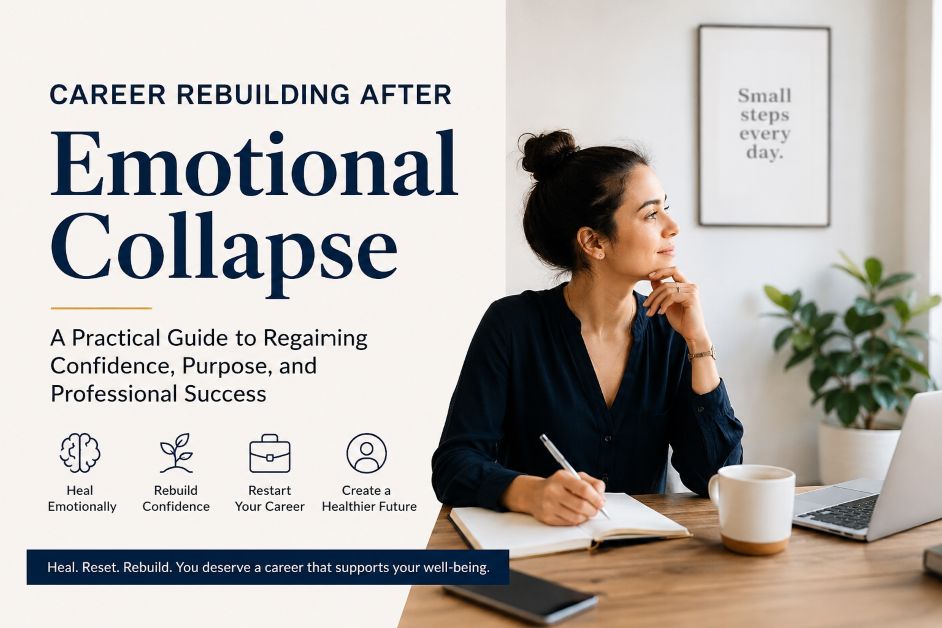
Emotional collapse can leave you questioning every part of your life, especially your career. Whether your struggles stem from prolonged stress, workplace burnout, a toxic relationship, grief, or a major life transition, returning to work may feel overwhelming. The good news is that healing and professional growth can happen together. Career rebuilding after emotional collapse is not about pretending nothing happened—it’s about moving forward with greater resilience, healthier boundaries, and renewed confidence.
Many people experience setbacks that temporarily disrupt their professional lives. Some leave toxic workplaces, while others take time away to recover from emotional exhaustion or trauma. Although the journey looks different for everyone, the path forward often begins with understanding what happened, allowing yourself to heal, and taking intentional steps toward rebuilding your professional identity.
If you’re wondering how to rebuild your career after emotional collapse, this guide offers practical strategies to help you regain direction while protecting your mental and emotional well-being.
What Is Career Rebuilding After Emotional Collapse?
Career rebuilding after emotional collapse is the process of restoring your professional confidence, skills, and career direction after experiencing severe emotional distress. Unlike recovering from an ordinary career setback, emotional collapse often affects your motivation, concentration, self-esteem, and ability to make decisions.
Emotional collapse can result from prolonged exposure to stress, workplace bullying, burnout, emotional abuse, financial hardship, or significant personal loss. These experiences may lead to emotional exhaustion, making even simple professional tasks feel impossible.
Learning about emotional healing and career growth helps you understand that recovery is not simply about finding another job. Instead, it involves rebuilding emotional resilience, rediscovering your strengths, and creating a healthier relationship with work.
Rather than rushing back into the same unhealthy patterns, successful recovery focuses on developing professional confidence, improving emotional intelligence, and creating sustainable habits that support long-term success.
Common Causes of Emotional Collapse That Affect Careers
Understanding what contributed to your emotional collapse is an important first step toward recovery. Recognizing the underlying causes allows you to make healthier career decisions moving forward.
Workplace Burnout
One of the most common reasons people begin recovering from workplace burnout is prolonged exposure to unrealistic workloads, chronic stress, and a lack of work-life balance. Over time, constant pressure can reduce productivity, increase mistakes, and diminish overall job satisfaction.
When burnout goes unaddressed, many professionals begin searching for ways to recovering from burnout at work while rebuilding their confidence and motivation.
Toxic Relationships Outside Work
Personal relationships can have a profound effect on professional performance. Emotional abuse, manipulation, or ongoing conflict often drains the emotional energy needed to succeed at work.
Many individuals find that healing after toxic workplace experiences also involves addressing unhealthy dynamics outside the office. Emotional recovery in one area often strengthens resilience in another.
For some readers, exploring topics like Christian codependency healing or reflecting on themes found in saints codependent good from evil may encourage deeper conversations about healthy relationships, boundaries, and personal growth.
Financial Stress
Unexpected financial hardship can create constant anxiety that affects focus, productivity, and decision-making. While rebuilding your career, developing a realistic financial plan helps reduce uncertainty and supports gradual progress.
Grief and Major Life Changes
Divorce, illness, caregiving responsibilities, or the loss of a loved one can dramatically change career priorities. During these seasons, many people begin finding purpose after emotional collapse, discovering new values that shape healthier career choices.
Signs Emotional Collapse Is Affecting Your Professional Life
Recognizing the warning signs early can prevent long-term career damage. Emotional collapse often develops gradually, making it difficult to notice until work performance begins to suffer.
Loss of Motivation
Tasks that once felt meaningful may suddenly feel overwhelming. Even highly accomplished professionals can struggle to complete everyday responsibilities.
This often leads people to seek guidance on a career restart after mental exhaustion because their previous motivation no longer feels sustainable.
Brain Fog and Poor Concentration
Difficulty concentrating, forgetfulness, and mental fatigue are common symptoms of prolonged emotional stress. These challenges may reduce productivity and create self-doubt, even among experienced professionals.
Fear of Returning to Work
Many people returning to work after emotional breakdown experience anxiety before interviews, meetings, or new job opportunities. Fear of repeating past experiences can make career decisions feel intimidating.
Low Confidence During Interviews
If you’ve experienced emotional collapse, interviews may trigger concerns about explaining employment gaps or discussing previous workplace experiences.
Learning strategies for job search confidence can help you communicate your experience honestly while focusing on your strengths and future goals.
Isolation From Professional Networks
Avoiding colleagues, mentors, or networking opportunities often slows recovery. Reconnecting with supportive professionals is an important part of rebuilding your professional identity and expanding future opportunities.
Why Healing Comes Before Career Growth
Many people believe they must immediately return to peak productivity after emotional collapse. However, lasting recovery begins with healing rather than rushing into another demanding role.
Your mind and body need time to recover from prolonged stress. During this period, focusing on emotional resilience, mental well-being, and stress management creates a stronger foundation for future success.
Developing healthy routines, improving sleep, practicing mindfulness, and seeking professional support when needed all contribute to workplace recovery. These habits not only improve emotional health but also strengthen decision-making, creativity, and long-term career satisfaction.
As your confidence gradually returns, you’ll be better prepared for rebuilding confidence after job loss, pursuing career planning, and making thoughtful decisions that align with your values rather than reacting to fear.
Remember that true success is not measured solely by promotions or income. It also includes protecting your emotional health, establishing healthy work boundaries, maintaining work-life balance, and creating a career that supports your overall well-being.
Whether your next step involves overcoming career setbacks, exploring a new profession, or simply regaining confidence in your current role, recovery is entirely possible. Every small action you take today contributes to career fulfillment, stronger resilience skills, and a healthier future.
How Emotional Collapse Changes Your Professional Identity
Recovering from emotional collapse often involves more than recovering from professional failure. It also means redefining how you see yourself as a professional. Many people discover that their previous identity was built around constant achievement, perfectionism, or the desire to please others. When those foundations are shaken, it can feel like losing a part of yourself.
However, recovery provides an opportunity to create a healthier and more sustainable professional identity.
Let Go of Perfectionism
Perfectionism often fuels chronic stress and burnout. Instead of striving for flawless performance, focus on consistent progress. Every completed task, successful conversation, or new skill contributes to rebuilding confidence after burnout.
Replace Self-Doubt With Self-Compassion
Negative self-talk can become one of the biggest obstacles to recovery. Rather than dwelling on past mistakes, recognize how much you’ve already overcome. Developing emotional resilience begins with treating yourself with the same understanding you would offer a friend facing similar challenges.
Embrace a New Definition of Success
Success no longer has to mean working longer hours or constantly proving your worth. Instead, consider whether your career supports your health, relationships, and long-term happiness. This mindset shift encourages lasting career fulfillment rather than temporary achievement.
A Step-by-Step Plan for Career Rebuilding After Emotional Collapse
If you’re wondering how to rebuild your career after emotional collapse, taking gradual, manageable steps often leads to the most sustainable progress.
Prioritize Your Recovery
Before searching for another job, make your physical and emotional well-being your first priority. Healthy sleep habits, regular exercise, counseling, mindfulness, and supportive relationships all contribute to emotional healing and career growth.
Assess Your Current Skills
List your technical skills, certifications, accomplishments, and transferable abilities. Even if you’ve taken time away from work, your experience still holds value.
This exercise can significantly improve professional confidence while helping you identify new career opportunities.
Set Realistic Career Goals
Break large goals into smaller milestones.
For example:
- Update your résumé this week.
- Complete one online course this month.
- Reach out to one professional contact each week.
- Apply for a few carefully selected positions rather than dozens at once.
Small wins gradually strengthen job search confidence.
Refresh Your Professional Brand
Update your résumé, portfolio, and professional profiles to reflect your current skills and achievements.
Remember, employers are interested in your ability to contribute today—not just what happened in the past.
Reconnect With Your Professional Network
Networking doesn’t have to feel intimidating.
Reconnect with former colleagues, mentors, classmates, or professional associations. These relationships often create valuable opportunities during a career restart after mental exhaustion.
Rebuilding Confidence After Job Loss and Emotional Trauma
Confidence rarely returns overnight, but it grows with consistent action.
Some effective ways to strengthen confidence include:
- Celebrate small accomplishments.
- Keep a journal of daily progress.
- Continue learning through courses or certifications.
- Volunteer or freelance to rebuild experience.
- Practice interview responses aloud.
- Focus on progress instead of perfection.
These habits strengthen both confidence building and resilience skills, making future career challenges easier to navigate.
Choosing a Healthier Career Path
Sometimes, emotional collapse reveals that your previous work environment was unhealthy.
As you evaluate new opportunities, prioritize workplaces that encourage:
Healthy Leadership
Look for organizations where communication is respectful, expectations are realistic, and employee well-being is valued.
Healthy Work Boundaries
Ask questions during interviews about workload, flexibility, professional development, and employee support.
Strong boundaries contribute significantly to workplace wellness and long-term success.
Continuous Learning
Employers who invest in employee development often create more supportive environments that encourage both career growth and personal development.
How to Explain Career Gaps With Confidence
Many professionals worry about employment gaps after emotional collapse.
Fortunately, honesty and confidence usually matter more than lengthy explanations.
A simple response might be:
“I took time to focus on my health and personal growth. During that period, I strengthened important skills, reflected on my career goals, and I’m now fully prepared to contribute to a new opportunity.”
This approach demonstrates maturity while supporting returning to work after emotional breakdown with professionalism.
Remember that many employers value resilience, adaptability, and emotional intelligence.
Financial Recovery While Rebuilding Your Career
Financial stress often accompanies emotional recovery.
Creating a realistic plan helps reduce anxiety while supporting recovering from workplace trauma and professional rebuilding.
Consider:
- Creating an emergency budget.
- Exploring temporary freelance opportunities.
- Upskilling through affordable online courses.
- Building multiple income streams where appropriate.
- Avoiding unnecessary financial pressure while healing.
Gradual progress often leads to more sustainable career resilience than rushing into another unhealthy work environment.
Building Long-Term Career Resilience
Lasting success depends on maintaining habits that protect both your career and your well-being.
Develop routines that support:
- Work-life balance
- Stress management
- Mental well-being
- Emotional intelligence
- Professional confidence
- Career planning
- Workplace recovery
Regular reflection also helps identify early warning signs before stress becomes overwhelming again.
Learning to recognize unhealthy workplace dynamics allows you to choose environments that support long-term success rather than repeated burnout.
Frequently Asked Questions
Can you recover your career after an emotional collapse?
Yes. Many professionals successfully achieve rebuilding their professional identity through intentional healing, skill development, and gradual career planning.
How to recover from emotional burnout?
Recovery usually involves rest, emotional support, healthier boundaries, improved self-care, professional guidance when needed, and gradually returning to meaningful work.
Is changing careers after burnout a good idea?
Sometimes. If your previous work environment contributed significantly to your emotional collapse, exploring a healthier career path may support long-term emotional wellness.
Can workplace trauma affect future jobs?
Yes. Recovering from workplace trauma often requires rebuilding trust, confidence, and emotional safety. Healing first can improve future career decisions.
How long does recovery take?
Every journey is unique. Recovery depends on individual circumstances, available support, and personal healing. Focusing on steady progress rather than speed encourages lasting life after burnout.
Conclusion
Experiencing emotional collapse does not define your future. It represents one chapter—not your entire story. Through patience, intentional healing, and consistent action, career rebuilding after emotional collapse becomes an opportunity to create a stronger, healthier, and more meaningful professional life.
Whether you’re recovering from burnout at work, rebuilding confidence after job loss, finding purpose after emotional collapse, or seeking an emotionally healthy workplace, remember that every step forward matters. By prioritizing coping strategies, strengthening professional confidence, and committing to lifelong personal development, you build the foundation for lasting career fulfillment.
Recovery also often inspires deeper reflection about relationships, purpose, and resilience. For some readers, exploring themes such as Christian codependency healing or saints codependent good from evil can offer additional perspectives on establishing healthier boundaries. Likewise, stories found in a psychological thriller about trauma or a gothic psychological novel may resonate with those processing difficult experiences through fiction while appreciating themes of courage, healing, and hope.
Your past does not determine your potential. With perseverance, self-compassion, and thoughtful career planning, you can overcome today’s challenges and build a career that reflects not only your skills but also your renewed strength and resilience.
If this guide has helped you, consider sharing it with someone who may also be navigating career rebuilding after emotional collapse. Your experience—and your encouragement—could become the motivation another person needs to begin their own journey toward healing and professional renewal.

0 Comments