
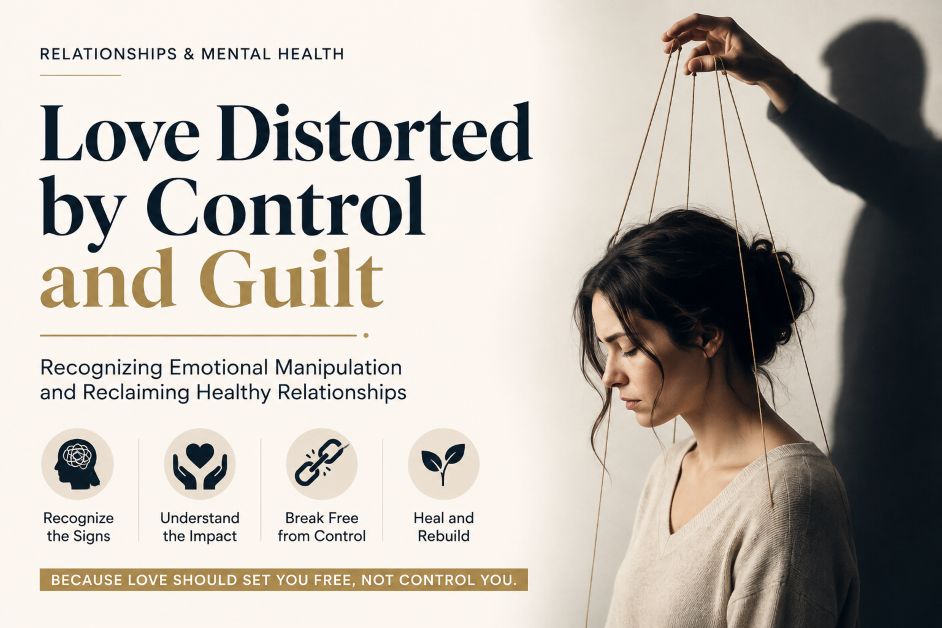
Love is often associated with trust, compassion, and mutual respect. However, not every relationship that feels intense or deeply emotional is healthy. Sometimes, what appears to be affection slowly transforms into control, obligation, and fear. Love distorted by control and guilt can leave a person feeling emotionally trapped, questioning their own judgment, and sacrificing their well-being to keep the relationship intact.
Many people fail to recognize these unhealthy patterns because manipulation rarely begins with obvious abuse. Instead, it often develops gradually through subtle criticism, excessive dependence, and repeated guilt-inducing behaviors that make one partner feel responsible for the other’s happiness. Over time, this emotional pressure can erode confidence, independence, and self-worth.
Understanding how love distorted by control and guilt develops is the first step toward recognizing unhealthy relationship dynamics and creating healthy relationships. This article explores the psychology behind controlling relationships, the warning signs of emotional manipulation, and why so many people struggle to leave relationships built on fear and obligation rather than genuine love.
What Does Love Distorted by Control and Guilt Really Mean?
At its core, love distorted by control and guilt describes a relationship in which affection is replaced by emotional pressure, manipulation, and conditional acceptance. Instead of encouraging growth and independence, one partner uses guilt, obligation, or fear to influence the other’s decisions and behaviors.
Healthy love promotes trust, open communication, and mutual respect. In contrast, controlling relationships often revolve around power rather than partnership. One person’s needs consistently outweigh the other’s, creating an unhealthy imbalance that may not be immediately obvious.
Common characteristics of unhealthy love include:
- Feeling guilty for spending time with family or friends.
- Constantly seeking approval before making decisions.
- Fear of disappointing your partner.
- Believing you are responsible for someone else’s emotions.
- Sacrificing your own needs to avoid conflict.
These behaviors often become normalized over time, making it difficult to distinguish between genuine care and relationship control.
How Guilt Becomes a Powerful Tool for Emotional Control
Guilt is a natural emotion that helps people recognize mistakes and maintain healthy relationships. Unfortunately, it can also become one of the most effective forms of psychological control when intentionally used to influence another person’s choices.
Rather than expressing needs honestly, a controlling partner may rely on guilt to create a sense of obligation. This subtle form of emotional manipulation encourages compliance without direct demands or threats.
Common examples include statements such as:
- “After everything I’ve done for you.”
- “If you really loved me, you would stay.”
- “You’re abandoning me.”
- “I guess I just don’t matter to you.”
- “You’re the only person I have.”
These phrases shift responsibility away from the manipulator and place emotional pressure on the other person. Over time, repeated guilt tripping conditions individuals to prioritize someone else’s emotional comfort over their own needs.
This cycle often leads to emotional dependency, where saying “no” becomes associated with shame, anxiety, or fear of losing the relationship.
Signs That Love Has Become Control Instead of Connection
Many people ask themselves whether their partner is simply caring or becoming controlling. The distinction often lies in whether love encourages freedom or demands compliance.
Some of the most common relationship red flags include:
Constant Monitoring
A partner frequently checks your location, asks for constant updates, or becomes upset when you spend time independently. This behavior is often disguised as concern but may indicate growing relationship control.
Isolation from Family and Friends
One of the most common tactics in toxic relationships involves slowly discouraging outside connections. You may be made to feel guilty for maintaining friendships or spending time with loved ones.
Walking on Eggshells
If you constantly worry about upsetting your partner, you may begin altering your behavior to avoid conflict. This creates an environment where fear gradually replaces emotional safety.
Feeling Responsible for Someone Else’s Happiness
Healthy relationships encourage emotional support, but they do not require one person to carry complete responsibility for another’s emotional well-being. Feeling personally responsible for another adult’s happiness often reflects emotional dependency rather than mutual love.
Frequent Self-Doubt
Victims of emotional abuse frequently question their own memories, decisions, and perceptions. Repeated criticism, blame, or subtle manipulation can gradually undermine confidence and increase reliance on the controlling partner.
Recognizing these warning signs early can help prevent deeper patterns of coercive control and long-term emotional harm.
Why People Stay in Toxic Relationships
One of the most misunderstood aspects of toxic relationship patterns is why people remain even when they recognize something feels wrong. The answer is rarely simple and often involves a combination of psychological, emotional, and social factors.
Trauma Bonding
Trauma bonding occurs when cycles of affection and mistreatment become emotionally intertwined. Moments of kindness following periods of manipulation create hope that the relationship will improve, making it difficult to leave despite ongoing harm.
Fear of Abandonment
Individuals with strong fears of rejection may tolerate unhealthy behavior because the possibility of being alone feels more frightening than remaining in an unhealthy relationship.
Hope for Change
Many people believe that if they love harder, become more understanding, or avoid conflict, the relationship will return to how it was in the beginning. Unfortunately, without genuine accountability and lasting behavioral change, these hopes often remain unfulfilled.
Low Self-Worth
Years of criticism, blame, or emotional neglect can gradually diminish self-confidence. When someone begins believing they deserve poor treatment, leaving the relationship may seem impossible.
Intermittent Reinforcement
One of the strongest psychological forces behind why people stay in toxic relationships is intermittent reinforcement. Occasional affection mixed with unpredictable criticism creates powerful emotional attachment, encouraging individuals to keep seeking moments of approval despite repeated disappointment.
Childhood Experiences That Can Normalize Controlling Love
Our earliest relationships often shape how we understand love as adults. Individuals raised in environments where affection was conditional may unknowingly accept unhealthy dynamics because they feel familiar.
Children who experience conditional love often learn that acceptance depends on meeting expectations rather than simply being valued for who they are. As adults, they may become highly sensitive to criticism and vulnerable to guilt in relationships.
Similarly, emotional neglect can leave individuals craving validation and approval. This desire for connection sometimes increases susceptibility to manipulation tactics, particularly when affection is inconsistently offered.
Another contributing factor is parentification, where children are expected to manage adult responsibilities or care for their parents’ emotional needs. These experiences can create lifelong patterns of people-pleasing, making it difficult to establish healthy boundaries in adulthood.
Understanding these early influences does not assign blame but provides valuable insight into why certain relationship patterns repeat across generations.
The Psychology Behind Love Distorted by Control and Guilt
The emotional dynamics behind love distorted by control and guilt are supported by several well-established psychological concepts. Attachment theory explains how early caregiving experiences influence adult relationships, with anxious, avoidant, or fearful attachment styles often affecting trust, intimacy, and emotional security.
Another important concept is cognitive dissonance, the mental discomfort that arises when someone’s beliefs conflict with their experiences. A person may believe their partner loves them while simultaneously experiencing repeated emotional coercion or gaslighting. To reduce this discomfort, they may minimize harmful behaviors or justify them, making it even harder to recognize psychological abuse.
Over time, repeated shame, obligation, and fear-based relationships can reshape a person’s identity, leading to chronic self-doubt and emotional exhaustion. Recognizing these psychological patterns is essential for breaking free from love distorted by control and guilt and beginning the journey toward healing, emotional resilience, and healthier relationships.
Emotional and Mental Health Effects of Long-Term Control
Living in a relationship defined by love distorted by control and guilt can have lasting consequences on both emotional and psychological well-being. While the effects may begin subtly, prolonged exposure to emotional manipulation, psychological control, and coercive control often impacts every aspect of a person’s life.
Anxiety and Chronic Stress
Constantly trying to avoid conflict or prevent a partner from becoming upset can leave a person in a state of continuous alertness. This heightened awareness, known as hypervigilance, causes individuals to overanalyze conversations, second-guess their decisions, and anticipate negative reactions. Over time, chronic stress may contribute to sleep disturbances, fatigue, and difficulty concentrating.
Depression and Emotional Exhaustion
Feeling trapped in controlling relationships often leads to sadness, hopelessness, and a loss of motivation. Individuals may gradually withdraw from hobbies, friendships, and activities they once enjoyed because their emotional energy is consumed by trying to maintain the relationship.
Identity Loss
One of the most overlooked consequences of relationship control is the gradual erosion of personal identity. A person who constantly prioritizes another’s needs may eventually lose sight of their own values, goals, and interests. This identity loss can make it difficult to make independent decisions or imagine life outside the relationship.
Decision Paralysis
Years of criticism and second-guessing can reduce confidence in one’s own judgment. Even simple choices may feel overwhelming because individuals fear making mistakes or facing criticism. This pattern often reinforces emotional dependency, making the controlling relationship feel even harder to leave.
How Controlling Relationships Escalate Over Time
Most unhealthy relationships do not begin with obvious abuse. Instead, love distorted by control and guilt usually develops gradually, making the progression difficult to recognize.
A common pattern looks like this:
Love Bombing
The relationship begins with overwhelming affection, constant attention, excessive compliments, and promises of a perfect future. While genuine affection is healthy, excessive idealization can create unrealistic emotional dependence.
↓
Increasing Dependence
The controlling partner encourages spending more time together while subtly discouraging independence. They may frame this as proof of love or commitment.
↓
Isolation
Family members, close friends, or trusted support systems gradually become viewed as threats to the relationship. The partner may use guilt tripping to discourage outside connections.
↓
Growing Control
Requests become expectations. Personal choices about finances, appearance, career, or social activities begin requiring approval.
↓
Fear and Obligation
The relationship becomes increasingly driven by obligation versus love. Decisions are motivated by fear of conflict, shame, or disappointing the partner rather than mutual respect.
↓
Emotional Exhaustion
Eventually, maintaining the relationship requires constant emotional labor, leaving little energy for personal growth or happiness.
Recognizing this progression helps explain why love becomes controlling and why many individuals fail to notice unhealthy changes until they become deeply entrenched.
Love, Obligation, Fear, and Guilt: Understanding the Difference
One of the most important steps toward relationship healing is learning to distinguish genuine love from emotional pressure.
Healthy love encourages trust, honesty, and mutual support. It allows both people to express opinions, maintain friendships, and pursue personal growth without fear of punishment or rejection.
Obligation, on the other hand, creates the belief that affection must be earned through sacrifice. People may remain in unhealthy relationships because they feel responsible for fixing another person’s emotional struggles.
Fear-based relationships rely on anxiety rather than security. Instead of feeling emotionally safe, individuals constantly worry about saying the wrong thing or making decisions that could trigger conflict.
Similarly, persistent guilt and emotional abuse often become intertwined. When guilt is repeatedly used to influence behavior, it shifts from a natural emotion into a form of emotional coercion. Recognizing the difference between healthy accountability and manipulation is essential for building healthy communication and stronger relationship boundaries.
Can a Relationship Recover After Control and Guilt?
Whether a relationship can recover depends largely on the willingness of both individuals to acknowledge unhealthy behaviors and commit to meaningful change.
Recovery may be possible when the controlling partner:
- Accepts responsibility without blaming others.
- Demonstrates consistent behavioral change over time.
- Respects newly established healthy boundaries.
- Supports independent decision-making.
- Participates in professional counseling when appropriate.
However, change is unlikely if manipulation, intimidation, or repeated gaslighting continues despite promises to improve.
In situations involving ongoing psychological abuse, persistent emotional manipulation, or escalating emotional abuse signs, prioritizing personal safety and well-being is often the healthiest decision. Seeking guidance from qualified mental health professionals can provide valuable support throughout this process.
Practical Steps to Heal From Love Distorted by Control and Guilt
Healing begins with recognizing that healthy relationships should encourage freedom rather than fear. Although recovery takes time, small, consistent steps can help rebuild confidence and emotional independence.
Rebuild Self-Trust
Start listening to your own thoughts and feelings instead of automatically dismissing them. Journaling, mindfulness, and self-reflection can strengthen confidence in your own judgment.
Establish Healthy Boundaries
Learning to say no without excessive guilt is a critical part of recovery. Healthy boundaries protect emotional well-being while encouraging respectful relationships built on mutual understanding.
Reconnect With Supportive People
Isolation often strengthens manipulation. Rebuilding connections with trusted family members and friends provides emotional validation and reminds individuals they are not alone.
Challenge Guilt-Based Thinking
Ask yourself whether the guilt you feel comes from genuine responsibility or from repeated manipulation tactics. Reframing distorted beliefs helps reduce unnecessary self-blame.
Develop Emotional Independence
Cultivating hobbies, pursuing personal goals, and strengthening self-confidence encourage emotional resilience and reduce reliance on external validation.
Seek Trauma-Informed Support
Professional counseling can help address trauma recovery, attachment theory patterns, and the lingering effects of emotional neglect, people-pleasing, and conditional love. Therapy also provides practical strategies for improving conflict resolution, strengthening self-esteem, and rebuilding self-worth.
Readers interested in exploring related topics may also find value in learning about Christian codependency healing, which examines how faith, personal boundaries, and emotional recovery can work together to support healthier relationships. Likewise, stories within a psychological thriller about trauma or a gothic psychological novel often illustrate how manipulation, fear, and emotional control can shape human behavior, offering readers additional perspectives on these complex relationship dynamics.
Frequently Asked Questions
Can someone control you without realizing it?
Yes. Some individuals repeat behaviors learned during childhood or previous relationships without recognizing they are using unhealthy manipulation tactics. Regardless of intent, repeated controlling behavior should be addressed through honest communication and, when appropriate, professional support.
Is guilt always emotional abuse?
No. Healthy guilt encourages accountability after genuine mistakes. However, repeated guilt tripping designed to influence another person’s choices becomes a form of emotional manipulation.
Why do people remain in controlling relationships?
Many factors contribute, including trauma bonding, fear of abandonment, emotional dependency, financial concerns, family pressures, and diminished self-worth.
Can controlling relationships become healthy?
Change is possible only when both partners are committed to honesty, accountability, and lasting behavioral change. Mutual respect and consistent effort are essential for long-term relationship healing.
How do I rebuild confidence after emotional manipulation?
Recovery involves rebuilding self-esteem, establishing healthy communication, practicing relationship boundaries, reconnecting with supportive people, and seeking professional guidance when needed.
Final Thoughts
Recognizing love distorted by control and guilt is not about assigning blame—it’s about understanding the difference between genuine love and relationships built on fear, obligation, or emotional pressure. Healthy love encourages trust, independence, compassion, and mutual respect. It never requires sacrificing your identity to earn acceptance.
If you recognize patterns of emotional manipulation, psychological control, or toxic relationship patterns in your own experiences, remember that healing is possible. By developing stronger boundaries, rebuilding emotional resilience, and addressing the effects of trauma bonding, attachment theory, and cognitive dissonance, you can move toward healthier, more fulfilling relationships.
Every step toward overcoming guilt, restoring self-worth, and embracing emotional freedom is a step away from fear and toward authentic connection. Healthy love empowers you to grow, respect yourself, and build relationships rooted in trust rather than control. If this article resonated with you, consider sharing it with someone who may benefit, leaving a comment with your thoughts, or subscribing to more insights on emotional well-being, healthy relationships, and personal growth.



0 Comments