
Have you ever looked in the mirror and felt like you no longer recognize the person staring back at you?
For many survivors, rebuilding identity after emotional trauma is one of the most difficult parts of healing. While emotional wounds may eventually begin to fade, the deeper struggle often involves reconnecting with a lost sense of self. Trauma can alter how you think, feel, trust, love, and view your place in the world.
Whether the trauma came from emotional abuse, a toxic relationship, childhood neglect, betrayal, or a devastating life event, it can leave you feeling disconnected from who you once were. You may struggle with confidence, self-worth, decision-making, and purpose.
The good news is that healing is possible. You are not defined by what happened to you. Through intentional healing and self-discovery, rebuilding identity after emotional trauma becomes an empowering journey toward reclaiming your voice, values, and future.
What Does Rebuilding Identity After Emotional Trauma Mean?
Rebuilding identity after emotional trauma involves restoring your sense of self after experiences that damaged your confidence, beliefs, emotional safety, or personal boundaries.
Trauma often changes how people see themselves. Survivors may begin questioning their worth, abilities, and even their identity.
Many people experiencing identity loss after trauma report feeling:
- disconnected from themselves
- emotionally numb
- uncertain about their future
- confused about what they want
- unable to trust their own judgment
The process of reclaiming your identity is not about becoming the person you were before trauma. Instead, it is about creating a stronger, healthier version of yourself moving forward.
How Emotional Trauma Affects Personal Identity
The relationship between trauma and self-identity is profound.
Trauma affects more than emotions. It influences beliefs, behaviors, relationships, and self-perception.
The Impact of Emotional Abuse on Self-Worth
When someone experiences ongoing criticism, manipulation, neglect, or emotional abuse, they often internalize harmful messages.
Over time, survivors may begin believing:
- I am not good enough.
- I am difficult to love.
- My needs do not matter.
- I cannot trust myself.
These beliefs directly impact self-worth after trauma.
Trauma Creates Negative Core Beliefs
Emotional trauma often reshapes the stories people tell themselves.
Instead of seeing themselves as capable and valuable, survivors may view themselves through the lens of fear, shame, or failure.
This is why emotional trauma recovery must address both emotional wounds and identity wounds.
Why Survivors Feel Disconnected From Themselves
Many people describe feeling like strangers in their own lives.
They may no longer recognize:
- their personality
- their passions
- their dreams
- their confidence
This emotional disconnection is one of the most common signs that identity healing is needed.
Signs You May Have Lost Your Sense of Identity After Trauma
Recognizing identity loss is the first step toward recovery.
Common signs include:
Feeling Like a Stranger to Yourself
You no longer know what makes you happy or what you truly want.
Difficulty Making Decisions
Many survivors second-guess themselves constantly because trauma damaged their self-trust.
Loss of Confidence and Self-Belief
A significant symptom of identity loss after trauma is feeling incapable, even when evidence suggests otherwise.
Chronic People-Pleasing
You may prioritize others’ needs while neglecting your own.
Emotional Numbness
Feeling disconnected from emotions often signals unresolved trauma and identity disruption.
If these experiences sound familiar, know that recovering from emotional trauma is possible.
Why Healing Identity Is Different From Healing Symptoms
Many people focus solely on reducing anxiety, depression, or PTSD symptoms.
While symptom relief matters, true identity healing goes deeper.
Healing symptoms asks:
“How can I feel better?”
Identity recovery asks:
“Who am I now?”
This distinction is important because people can experience reduced symptoms while still feeling lost.
Rebuilding identity after emotional trauma requires reconnecting with values, purpose, and self-worth—not just reducing emotional distress.
The Grief of Losing Your Former Self
One rarely discussed aspect of trauma recovery is grief.
Many survivors mourn the person they were before the trauma occurred.
You may grieve:
- lost innocence
- lost confidence
- lost opportunities
- lost relationships
- lost dreams
This grief is normal.
Part of healing after emotional abuse involves acknowledging these losses while making space for new growth.
Letting Go of Who You Thought You Would Be
Healing often requires accepting that life has changed.
Acceptance does not mean approval.
It means choosing to move forward instead of remaining trapped in the past.
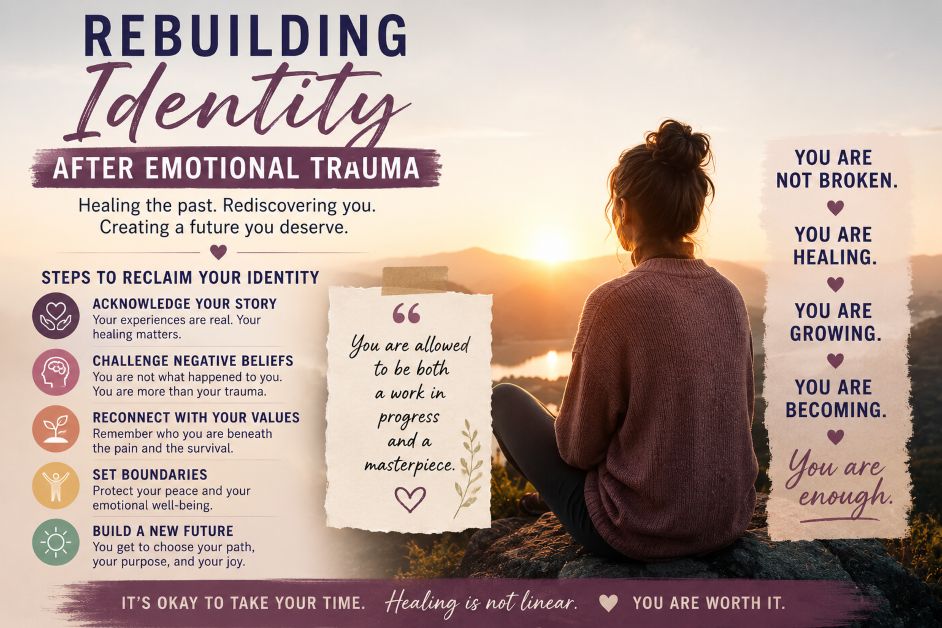
How to Rebuild Identity After Emotional Trauma
The process of rebuilding your identity after trauma takes time, but it is achievable.
Step 1: Reconnect With Your Core Values
Ask yourself:
- What matters most to me?
- What do I believe in?
- What kind of life do I want to create?
Values become the foundation for identity reconstruction.
Step 2: Challenge Trauma-Based Beliefs
Many survivors carry beliefs that are simply not true.
Examples include:
- I am broken.
- I am unworthy.
- I will never heal.
Learning to challenge these beliefs is essential for reclaiming yourself after trauma.
Step 3: Rediscover Interests and Passions
Trauma often causes people to abandon hobbies, goals, and passions.
Experiment with:
- creative activities
- volunteering
- learning new skills
- physical movement
- travel
These experiences help you reconnect with yourself.
Step 4: Establish Healthy Boundaries
Strong boundaries protect your emotional health.
Boundaries communicate:
- what is acceptable
- what is not acceptable
- how you expect to be treated
Healthy boundaries are essential for rebuilding confidence after trauma.
Step 5: Practice Self-Compassion
Healing is not a race.
Speak to yourself with the same kindness you would offer a close friend.
Self-compassion strengthens self-worth after trauma and supports long-term recovery.
Step 6: Create a New Vision for Your Future
One powerful exercise for recovering your sense of self is imagining the life you want to build.
Ask:
- What brings me peace?
- What brings me purpose?
- Who do I want to become?
Rebuilding Confidence After Emotional Abuse
Many survivors struggle with self-trust.
A critical part of rebuilding confidence after emotional abuse involves learning to trust your instincts again.
Start With Small Decisions
Confidence grows through action.
Practice making small decisions without seeking excessive reassurance.
Celebrate Progress
Recovery rarely happens all at once.
Celebrate:
- healthy boundaries
- difficult conversations
- personal achievements
- emotional breakthroughs
Every step forward matters.
Stop Measuring Yourself Against Others
Comparison often fuels shame.
Focus on your own healing journey.
Your progress deserves recognition.
The Role of the Nervous System in Identity Recovery
One of the most overlooked aspects of emotional trauma recovery is nervous system healing.
Trauma keeps the body in survival mode.
When constantly focused on survival, it becomes difficult to access your authentic self.
Survival Mode vs Authentic Living
Survival mode often involves:
- hypervigilance
- anxiety
- fear
- emotional shutdown
Authentic living involves:
- creativity
- curiosity
- connection
- confidence
Nervous System Regulation Techniques
Helpful practices include:
- deep breathing
- mindfulness
- grounding exercises
- yoga
- somatic therapy
- meditation
These techniques support healing identity after toxic relationships and other trauma-related experiences.
Rebuilding Identity After Toxic Relationships
Many people searching for healing identity after toxic relationships feel emotionally exhausted.
Toxic relationships often erode:
- self-esteem
- independence
- confidence
- personal identity
Breaking Trauma Bonds
Trauma bonds can make leaving emotionally harmful relationships difficult.
Healing involves recognizing unhealthy patterns and choosing healthier connections.
Reclaiming Independence
One of the most important steps in finding yourself again after abuse is learning to enjoy your own company.
Rediscover activities and goals that belong to you alone.
Creating a Life Beyond Survival
You deserve more than survival.
You deserve joy, fulfillment, and peace.
Post-Traumatic Growth: Becoming Stronger After Trauma
Many survivors eventually experience post-traumatic growth and identity development.
This does not mean trauma was beneficial.
It means healing can produce unexpected strengths.
New Strengths Often Include
- resilience
- empathy
- emotional intelligence
- self-awareness
- courage
Creating a New Life Story
One of the most empowering aspects of rebuilding identity after emotional trauma is realizing your story is still being written.
Your trauma is part of your story.
It is not your entire story.
Final Thoughts on Rebuilding Identity After Emotional Trauma
The journey of rebuilding identity after emotional trauma is rarely easy, but it is absolutely possible.
You may currently feel lost, disconnected, or uncertain about who you are. Those feelings are common among survivors, but they do not define your future.
Through emotional trauma recovery, reclaiming your identity, recovering from emotional trauma, and rebuilding confidence after trauma, you can create a life rooted in self-worth, authenticity, and hope.
If you have been struggling with feeling lost after emotional trauma, remember this:
You are more than what happened to you.
You are more than your pain.
You are more than your past.
Healing is not about becoming who you were before trauma.
Healing is about becoming the person you were always meant to be.



0 Comments